Coming Up
Early Edition

Register to Get LinkedIn Notification of Our Next Episode!
Mid-Day Edition
Register to Get LinkedIn Notification of Our Next Episode!
Special Edition
Register to Get LinkedIn Notification of Our Next Episode!
SalesTV.live is a weekly talk show about the world of Sales by salespeople for salespeople.
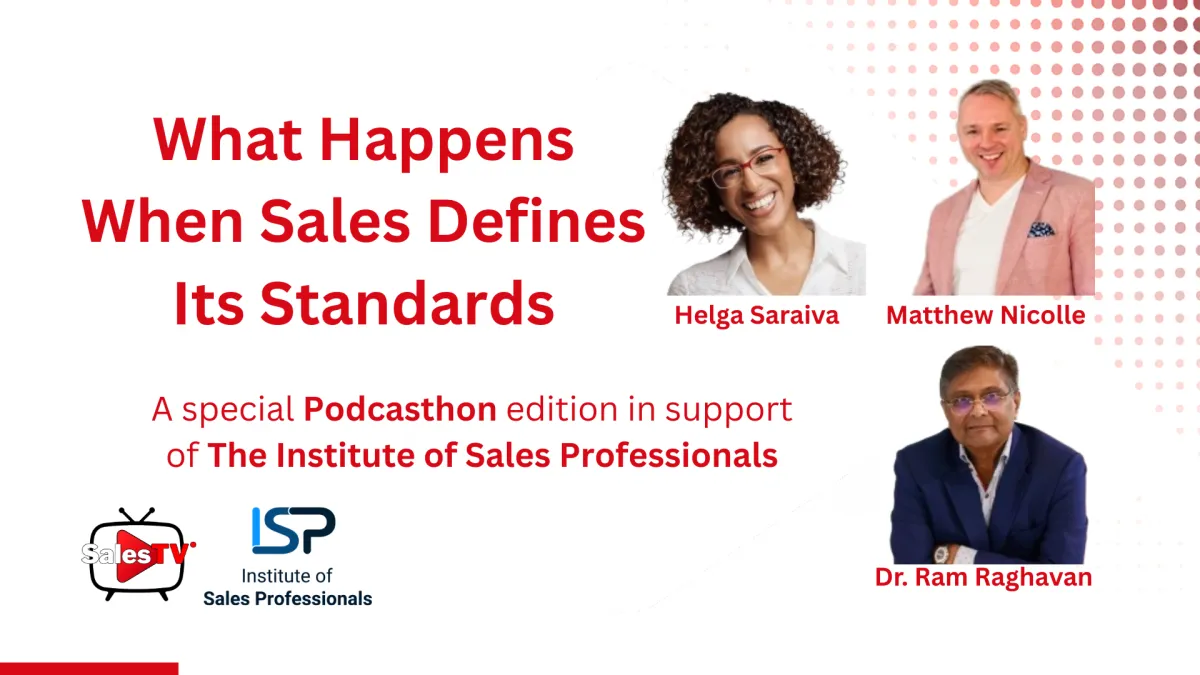
What Happens When Sales Defines Its Standards
A special Podcasthon edition of SalesTV in support of The Institute of Sales Professionals
The Sales profession drives growth in every industry, yet Sales has never fully agreed on a set of shared standards that define it. But what happens when that changes?
In this episode of SalesTV, we explore how professions begin defining their standards and what shared standards could mean for hiring, training, performance, and trust in the sales profession. Joining the conversation are leaders from the Institute of Sales Professionals representing global leadership, enterprise sales, sales education, and the human side of the profession. Together they examine how standards emerge in a profession, why they matter, and what could change for sales organizations and practitioners as the profession begins defining them more clearly.
We’ll ask questions like -
* How does a profession know when it’s time to start defining its standards?
* How are we seeing the sales profession evolve globally?
* What problems do shared standards solve for sales organizations?
* How do professional standards influence trust?
This special episode is part of the global Podcasthon initiative, where podcasts around the world highlight charities and organizations they support. SalesTV is proud to spotlight the Institute of Sales Professionals, whose mission is to advance sales as a respected profession through shared standards, professional development, and a global community of practitioners committed to improving how sales is practiced.
Join us Tuesday at Noon ET/ 9am PT.
This week's Guests were -
Helga Saraiva, Executive Director for Global Transformation and Growth at the Institute of Sales Professionals (ISP)
Matthew Nicolle, CEO of Sales Training Experts and President & CEO of ISP Canada
Dr. Ram Ramraghvan, Founder of RiddleBox, Joint Chair of the ISP's Mental Health and Wellbeing Committee and is helping expand the ISP’s presence in India
This week's Host was -
Rob Durant, CEO, ISP US
Transcript of SalesTV.live Mid-Day Edition 2026-03-17
Rob Durant [00:00:02]:
Hello and welcome to a special edition of Sales TV. With millions of practitioners worldwide, sales is clearly a profession of note. Yet unlike many professions, sales has never, never formally agreed on a shared set of standards. So the question for today's conversation is simple: what happens when a profession begins defining its standards. This episode of Sales TV is part of the 2026 Podcastthon celebration, where podcasts around the world highlight charities they support. The Sales TV charity of choice is the Institute of Sales Professionals. Many of our broadcasts align with the standards and capabilities found in the ISP Sales Capability Framework, But today we're stepping back from the framework itself to explore a more fundamental question: why do professions define standards in the first place? Joining me today are Helga Soreva, Executive Director of Global Transformation and Growth at the Institute of Sales Professionals. Helga focuses on expanding professional sales standards and capability development internationally.
Rob Durant [00:01:25]:
Matthew Nicole, CEO of Sales Training Experts and President and CEO of ISP Canada. Matt brings a perspective of both sales and practitioners as well as educators working with organizations to improve sales capability, hiring, and performance. And Dr. Ram Raghavan, Founder of Riddle Box, a consultancy focused on leadership, performance, and well-being. Ram also serves with the Institute of Sales Professionals as joint chair of the Mental Health and Well-Being Committee and is helping expand the ISP's presence in India. Every profession evolves over time. At some point, the people inside that profession begin defining what good looks like. The knowledge, the skills, and the standards that shape it.
Rob Durant [00:02:24]:
So Helga, let me start with you, if I may. How does a profession know when it's time to start defining its standards?
Helga Saraiva [00:02:34]:
Hi, and thank you for the introduction, and hello to everyone who's joining us and listening to this podcast, celebrating this podcastathon, as you call it. Sales is a very interesting and exclusive industry, I believe, because unlike most professions where integrity and demonstrating knowledge, competence, skills, maturity, and so on, like accountants, doctors, professors, you know, people taking care of our children, Sellers have historically, since late 1800s, have just been a bit of a cowboy industry, hasn't it? And throughout the, the last 30 years, since especially since I remember the last 30 years, 25, 25 years or so, the client has really been dictating what they deserve, how they want to be served, how they want to be understood. And technology has allowed them to have this voice and demand that off of us. And, and so standards, unfortunately, in our profession are coming in and need and have a place and need to have a place because they're being imposed by our clients. And they're being imposed because they deserve a better service from us, and they demand us to understand their reality a lot better than what we do from the very first moment we start engaging with them.
Rob Durant [00:04:17]:
Awesome. So Matt, I want to turn to you for a moment. What problems do shared standards solve for sales organizations?
Matthew Nicolle [00:04:28]:
That's a great question. And thanks for the invitation and really appreciate this opportunity to be sharing globally with my peers on the call. So I think that the first thing we need to understand is that, you know, nothing happens until someone sells something. And without customers, we don't have a business. So by virtue of that, we have to take a step back and think about voice of customer. So if we look at latest data points on voice of customer, whether you're reading McKinsey, Boston Consulting Group, Gartner, Deloitte, etc. What we will see is that B2B buyers invariably today would prefer a rep-free purchasing experience. They would prefer this Amazon direct-to-consumer click model.
Matthew Nicolle [00:05:19]:
The evidence or the voice of feedback back to the sales organization is that we're not doing such a good job. So as it relates to standards and benchmarks and frameworks, even more important as we're listening to our buyers, because at the end of the day, Dr. Rackham says it best. Dr. Rackham, the founder of SPIN Selling, when he endorsed Challenger as the dominant sales methodology, he said our criteria should be if a customer would pay for that sales call. That is the hallmark of a great time well spent, you know, in a buying and selling organization. So if we're showing up we're unprepared, we're not adding value to the customer and helping them, meeting them where they are and helping them along their buyer's journey. What is our, what is our role today? We need to have a role where we're being a Sherpa for a buyer, helping them navigate the various alternatives that are available in the marketplace.
Matthew Nicolle [00:06:21]:
And what that does is it puts the onus back on the sales organization to show up in the absolute best possible manner and be that business consultant to help this organization buy, period. End of story. So frameworks, certifications, benchmarks become paramount as we look to define what good looks like in the sales profession.
Rob Durant [00:06:45]:
Excellent. Thank you. Building off of that, Ram, how do professional standards influence trust?
Dr. Ram Raghavan [00:06:53]:
Interesting question, Rob. Thanks for having me. So I mean, like when Helga and Matthew spoke about standards, they're talking about it from an external perspective. I would like to look at it from an internal perspective, which means I'm talking about the contract basically leaders have with the teams, which then impacts what goes outside the organization. So for me, if I look at professional standards, it's the foundation for psychological safety and reliable working relationships. Because without that feeling of security that employees or the sales team experience, ethics is going to walk out of the door. People are not going to trust anything and anything that is said, which means that gets reflected on how they communicate with their clients. What they do with clients.
Dr. Ram Raghavan [00:07:45]:
For me, when I look at professional standards, I see that as the building block for building trust. And trust, basically, if I have to step back slightly, I can look at it from 3 levels. One is things that we think. And the second thing is what we feel. And there is something which we start realizing even before we feel. It's in the terms of psychological, you know, landscaping, it's basically conscious, subconscious and preconscious is what I would call it. So preconscious is where, you know, when you look at someone, something happens within you, which makes you churn or feel warm towards that person. That fuzzy thing that happens is basically the trust.
Dr. Ram Raghavan [00:08:30]:
And that is influenced by multiple things that happen within you and within your team. And what happens with the team is influenced by the leaders. Where they set the tone. And professional standards allow you to set the tone so that things can happen in a way that people feel that they are part of something, and they can then give something to the organization to create better experience for the customer. If we trust someone, invariably or inevitably, what happens is we are actually giving up something personal, or we are expecting something massive from the recipient, or we as being the donor, we are expected to give something which is of significant value. That's how I see it. So professional standards help build trust, which then fuel the experiences that get shaped externally.
Rob Durant [00:09:25]:
You know what I love about your answer, Ram? When we talk about trust in a sales paradigm, generally, we're implying trust of the salesperson by the buyer. Your answer didn't even take us outside of the organization. Your answer was foundational. It was talking about trust of the seller in their organization, trust of their peers, trust of their leaders. That's a fantastic way of looking at it. I appreciate that. Thank you. Let me open up these questions to everyone on the panel.
Rob Durant [00:10:08]:
Speak up as you see fit. I'd love to get your thoughts. Do sales professionals actually care about shared standards, or are results all that matter? Matt, you're laughing.
Matthew Nicolle [00:10:27]:
Yeah, no, it's, it's an interesting question because the perspective I take on sales excellence is I overlay it to other performance professions. And we can look at things like sports. So anyone that has any experience as a former elite athlete, perhaps collegiate, varsity level, etc., know that training, continuous improvement, discipline, beginner's mindset, you know, these things that are defined as standards of excellence are common practice for, you know, folks that endeavor to be the best in their craft. I'm just using sports as an example, but if you watch how an elite athlete prepares, if you Look at how elite athletes are open for coaching and feedback. They're all about trying to hone their craft and make their craft as best as possible. They want to work with the best. If you want to be the top hockey player— I'm in Canada— you've got to go to the centers where the best train and where the best coaches are, the centers of excellence. And you have to up your standards to the top level if you want to be the best.
Matthew Nicolle [00:11:47]:
And the result is your fans and your whole ecosystem are the net beneficiaries of you striving to have that higher performance. So if we go back to sales, I relate it back to how I started. Buyers have a much higher expectation on the selling organizations today than they've ever had before. Buyers have information, They have access to many tools and resources. So if the seller is showing up and they're not upping their game, they're not adding value in the conversation, what is their purpose? The buyer might as well buy online if the salesperson is not adding value. You know, without getting too much in the history, the sales organization, you know, when we were an industrial powerhouse manufacturing in the West, had a purpose meeting with buyers. Buyers actually had to meet with OEM, original equipment manufacturers. But with the internet, e-commerce, and, and direct-to-consumer, the Amazon models, they actually don't have to meet with us.
Matthew Nicolle [00:12:48]:
Like, if you want to buy a Tesla today, it's a zero-rep experience. It's completely dot-com. So now we have to really up our standards, our benchmarks, and our games, adding value, because in my humble opinion Customers are not necessarily saying they're not buying because the number one reason why deals are lost today, it's not because, you know, the customer chose ABC vendor. It's because they were lost to no decision. The organization simply couldn't make a decision. So in that case, it was a missed opportunity for the sales organization to help work with the buying organization and lead them across a bit of a journey and help enable them, provide, you know, alternatives, information, insights, etc., you know, to be in concert, in partnership as they look to, you know, engage with a purchasing decision, a large purchasing decision. So we have to show up, we have to add value, we have to bring insights, and the foundation of that is us sharpening our saw, as the great Stephen Covey said, in our crafts so we can show up, you know, at the very best level to meet our buyers where they are and help guide them along their purchasing journey.
Rob Durant [00:14:10]:
I hear you, but I'm still going to challenge Helga. Tap in. Is it all about the money?
Helga Saraiva [00:14:18]:
So, um, we talk about sales, right? So yeah, I mean, it's become a sin to say it's all about the money. Um, yes and no. Look, let's not forget, you know, we're in sales. Our job is to generate revenue for our company, right? There's no other— every single part of an organization, whatever organization you're talking about, I don't care if we're talking about a government public entity or a charity or private corporation, a startup, no entity survives— sorry, every single entity survives at the back of two things. Apart from people, of course, right? People are the most important asset. Apart from that, companies have debt or they have revenue. That is it. If we're going to simplify things as much as possible, you can pay salaries out of debt, or you can pay salaries and your electricity bills off of the revenue that you generate.
Helga Saraiva [00:15:16]:
Now, your question earlier was about, do salespeople care? About standards. I, I'm gonna say it depends, because look, we're giving it a name, right? We're giving it a name. We're giving the name— we, we're throwing this name out there. The name is standards, right? If you were to ask most salespeople— and I want to use the analogy that Matt picked up on earlier, which is high-performing athletes. In any sport, there's high-performing athletes and there's mediocre athletes. And there's people who are just trying to pretend like they know the sport, but they actually don't even, you know, they're not even performing at all. And sales is a bit like that. And so if you ask me, are there people that care about what kind of credibility they're passing along to their customers? And I'm talking about the purposeful credibility that is positioned in social media, for example, or the first time somebody says hello to a potential, you know, to a lead or a prospect.
Helga Saraiva [00:16:25]:
And the first thing that comes out of their mouth and how they introduce themselves and how well do they demonstrate that they know the reality of that person or that representation of that person, the possible pains that they might be going through and that they value fixing. The ability of that salesperson to perform discovery, right? And asking and understanding and executing the powerful questions, right? The ability of that person to listen. So are there people that care about doing that to excellence? Hell yeah, right? Absolutely yes. Are there people who are just thinking, oh my gosh, my company pushes me in everything that I'm surrounded with, the push here is to be more like a product-centric, you know, hit-and-quit kind of person, spray-and-pray kind of attitude. Yes, because I'm forced by my company to be that way, because the standards that the company imposes on me force me to be that way, even though I don't feel like that's me and my personality. So it's a really tough question to answer because you have pressure coming from companies and the way that they are built and the way that they build their commercial engines. And then you have the pressure that comes from within, which, you know, Ram opens this, this, this perspective, so I've got to jump on it because I love it, which is how do we feel in in terms of who we are as people, our personality, our integrity, how we like to relate to people, and how we ultimately like to serve them. Because that's what selling is.
Helga Saraiva [00:18:16]:
Selling is to serve our customers, to help them to achieve what they desire and what they want, but they can't at the moment because they need certain root problems fixed for them, which is what we sell.
Rob Durant [00:18:36]:
Ram, I want to bring this question to you. Do sales professionals actually care about shared standards, or are results all that matter? What's motivating me to do my job well?
Dr. Ram Raghavan [00:18:52]:
See, I mean, it's an interesting question, just like the other people who responded, like Helga and Matt. I would say it is a polarizing question. Half of it depends on the situation the company is in. So if the company is in survival mode, and if you look at the type of leadership that drives it, if it's a red leadership, for example, it's all about getting out there, getting results, I don't care what happens, how many dead bodies I leave behind, then standards really don't matter in that case. So ultimately, it goes back to the culture of the organization and the style of leaders that create that kind of things. Because no one wakes up in the morning saying, I'm going to cheat my customer, I don't want to— they don't brush their teeth saying this as a mantra, let me see how much I can con my customers, let me see how much I can cheat my customers. But when they walk through that door, someone or something is actually making them behave the way they are forced to behave. Some cases, there is a value congruence, because you like— if you like thriving in an environment where, you know, making the quick buck is the way to go, you enjoy that.
Dr. Ram Raghavan [00:20:09]:
But then there is a conflict of value. And when you're talking about professional standards and talking about selling in an ethical way, care then takes a backseat. Cultures that don't really promote care don't care about what happens externally. So it's all about what have we done rather than how have you got there and why did you do that. They don't ask that question.
Matthew Nicolle [00:20:36]:
Can I—
Rob Durant [00:20:36]:
the company is in survival mode. My question rhetorically is, yeah, when are you not in survival mode if you operate in survival mode? So that, that is— Matt, go for it.
Matthew Nicolle [00:20:50]:
Yeah, sorry, I'm chomping at the bit here because the, the question, Rob, is one and the same. I don't see it different, right? So the question was served up as money versus standards, and when, when you think about it, it's one and the same. If you look, let's, let's just stop, think about customers, talk to customers. If customer Customers will tell you that they would prefer an A-player to show up in their customer environment that was there to materially drive an outcome for them and drive that higher level standard. That's what the customer wants. Okay. So if I'm a sales professional, I'm thinking about, you know, as Sandler Sales says, commission breath. That's a term from Sandler.
Matthew Nicolle [00:21:37]:
It's one and the same because in order— the buyer saying, I want you to show up this way. And that's the path to prosperity on your commission check. That's the path to prosperity on, you know, achieving President's Clubs and these, these high-level standards that are in the major Fortune 500 brands that they have. So it's one and the same. By showing up in this manner in which we're going to add a tremendous amount of value, and we are the differentiator, we, we outsell the competition. We, the way in which we work with the customer It's one and the same. Money comes when you drive the highest level of performance and you add the most value. Period, end of story.
Rob Durant [00:22:18]:
The conjunction is not either/or. The conjunction is and.
Helga Saraiva [00:22:24]:
And so maybe I can interject that because I find that it's worth noting that different industries, selling in different industries, will also drive different behaviors. And we work in an organic environment. I mean, imagine waking up as the person who operates in the oil industry today, right? Like, I think you're selling ecosystem and environment and energy and culture within your organization and across your industry today is very different from a week ago.
Rob Durant [00:23:03]:
Right?
Helga Saraiva [00:23:04]:
So, so when we are talking about standards, I think that for as long as we're— for as long as any one particular industry continues to make money, i.e., the companies in that industry continue to make money by not— by getting away without— of not having standards, That will continue. And only the industries where the customer has matured to a profile where it can exert pressure on the companies that operate in that ecosystem so that they behave to a higher standard of excellence, to a higher body of behavior and knowledge about them and knowledge about the reality Those are the industries where we're seeing standards play a really key role in distinguishing and separating mediocrity from the rest.
Rob Durant [00:24:10]:
Along those lines, again, I'll open it up to the, the panel. How do shared standards influence sales hiring and training? I can tell you from my own experience, when I was able to point to a formal sales onboarding and ongoing training and development plan, as we were— I was working for a startup at the time— we were able to hire above our weight class. We had candidates in our candidate pool that were applying to some better-paying organizations, some more well-known organizations. But they chose to come to our organization. And after the fact, only after the fact that they came on board, I asked them, well, you had the chance to go here, but you went here. What drove that? And they said to me, the fact that you had this mapped out for me. The fact that you had all of this and career pathing aligned to it made the difference. I could see my future here because you explicitly shared with me before even hiring what I can expect for myself and my career track.
Rob Durant [00:25:43]:
That's just one example. But shared standards and shared training and development aligned to standards absolutely increase the opportunities for recruitment and significantly reduce turnover.
Matthew Nicolle [00:26:08]:
Yeah, I got to chime in on this one. So it's very timely, Rob. The question. So last night I had a— I was teaching a graduate program, MBAs, how to sell, and we had a lovely guest attending my class, and it was the Xerox Corporation. And this is definitely a shout out to the Xerox Corporation because I believe that they were the benchmark for many years in terms of where to get world-class selling skills. And in fact, if anyone wanted to learn the sales profession, You know, it was sort of like, go work at Xerox, go work at Xerox, they're going to teach you how to sell. And if you had Xerox on your resume and you were in a position where you're looking for a new opportunity, someone would hire you because you went through the Xerox Sales Academy. Xerox was sort of like the standard as it relates to world-class excellence in B2B sales.
Matthew Nicolle [00:27:01]:
And we know the rich history of the Xerox Corporation with the development of the sales profession. So I think it's one, one example of standards and the value to employers. You know, another thing just outside of the Xerox example is, you know, for years I used to represent prior to the Institute of Sales Professionals is, you know, different designations and industry standards in different associations. And one of the things I'm proud of here at the Institute of Sales Professionals is we actually have a designation certification and ethics for sales, which is very interesting if you have that on your resume. Resume, imagine showing up and you've got this LISP or MISP next to your name and an employer says, hmm, interesting, what's that? And you talk about how you're meeting the ethical global standards of the Institute of Sales Professionals and you're registered in the system of record that we have for sales professionals, you know, that signals to an employer that this person is obviously not only a continuous improvement person and wants to learn, but they are holding themselves to the highest standard. They take the profession seriously. Therefore, my customers are going to get the best. There you go.
Rob Durant [00:28:24]:
We're running out of time, but I have one more question and I want each of you to give a shot at an answer. But keep it to about 30 seconds. Put on your futurist hat. 10 years from now, when global standards have been widely adopted, what does the profession of sales look like? I'm going to put you on the spot. Ram, let's start with you.
Dr. Ram Raghavan [00:28:56]:
Okay, I was just thinking about it. I mean, if for me that the, what do you call, how I see it is sales is not the profession you eventually land in because you didn't find anything else. That perception would change. Sales would be the profession because you have to sell to everyone. You have to sell to your wife, partner, child. So it becomes a necessary skill. So I see when standards are in place, sales becomes a career of choice, not as a fallback opportunity. That's how I see it.
Rob Durant [00:29:32]:
I love it.
Matthew Nicolle [00:29:33]:
Helga, yeah. Oh, sorry.
Helga Saraiva [00:29:37]:
Go for it, Matt.
Matthew Nicolle [00:29:38]:
Yeah, I was just gonna build on Ram. So you know the expression, in great tides all boats rise, rise, all boats rise. That's what I would see happening, right, is there'd be a groundswell of pushing the bar up, pushing the bar higher. As Ram mentioned, you know, there's a number of materials out there written on this about the accidental sales professional, right? I always say when I do talks and so on, how many, you know, thought they're going to be in sales? And like, no hands come up. So I think you're absolutely right. It's going to drive a higher bar. And the, again, the net beneficiary is the customer and their outcomes are trying to achieve.
Rob Durant [00:30:19]:
Love it.
Matthew Nicolle [00:30:19]:
Helga?
Helga Saraiva [00:30:21]:
I'm going to continue on that, using that analogy, Matt, about— I'm thinking in 10 years' time, the sales profession is going to be like this beach where the tide has pulled back so far that we can see who's been, who is swimming naked. And, and, and the ones that have got their shorts and their swimming costumes on and are going to be the ones that stand out because they, they show how they are, they are differentiating how they sell. It's not what they sell. It's not how much it costs. It's how they do it. And we will look like today's best doctors because we show an innate and excellent ability to diagnose our customers' realities and where they're trying to achieve. And we are masters at positioning our solutions as the way to eliminate those problems and achieve those results for them, for their reasons, not ours.
Rob Durant [00:31:40]:
Fantastic. Myself, I was tricked into my first sales role. I look forward to the day where nobody else regrets begrudgingly having to take a sales job. But instead chases this career as a lifelong profession that is valued. This has been great. On behalf of everyone at Sales TV, I want to thank you for today's conversation. For our audience, please know a full transcript of today's episode along with contact information for each of the panelists can be found at SalesTV.live/SalesStandards. I want to thank you all for joining us and we'll see you next time.
@SalesTVlive
#SalesStandards #SalesTraining #SalesEnablement #B2BSales #RevenueGrowth
#Sales #SalesLeadership #LinkedInLive #Podcast
________________________________________
About SalesTV: SalesTV is a weekly talk show created by salespeople, for salespeople. Each episode explores sales, sales training, sales enablement, and social selling, bringing together sales leaders, enablement professionals, and practitioners from across the globe.
About the Institute of Sales Professionals: The ISP is the only body worldwide dedicated to raising the standards of sales. Its Sales Capability Framework, certifications, and member community are designed to address their one goal: To Elevate the Profession of Sales.


Monday
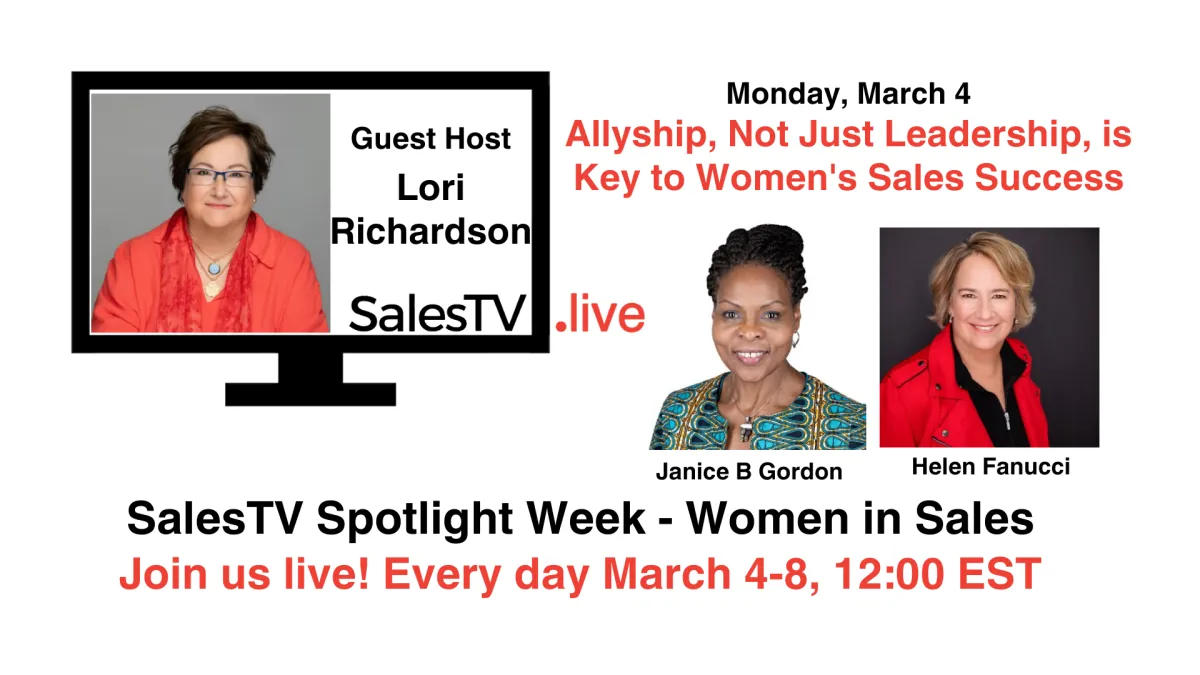
Register to Get LinkedIn Notification of This Episode!
Tuesday
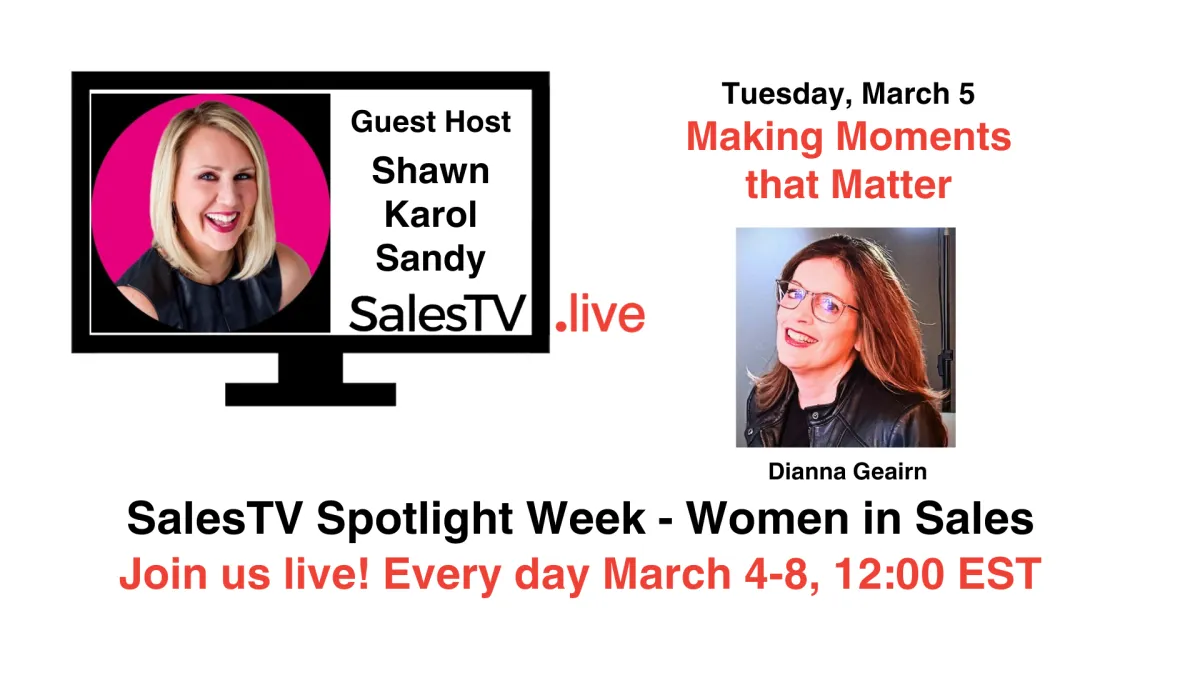
Register to Get LinkedIn Notification of This Episode!
Wednesday
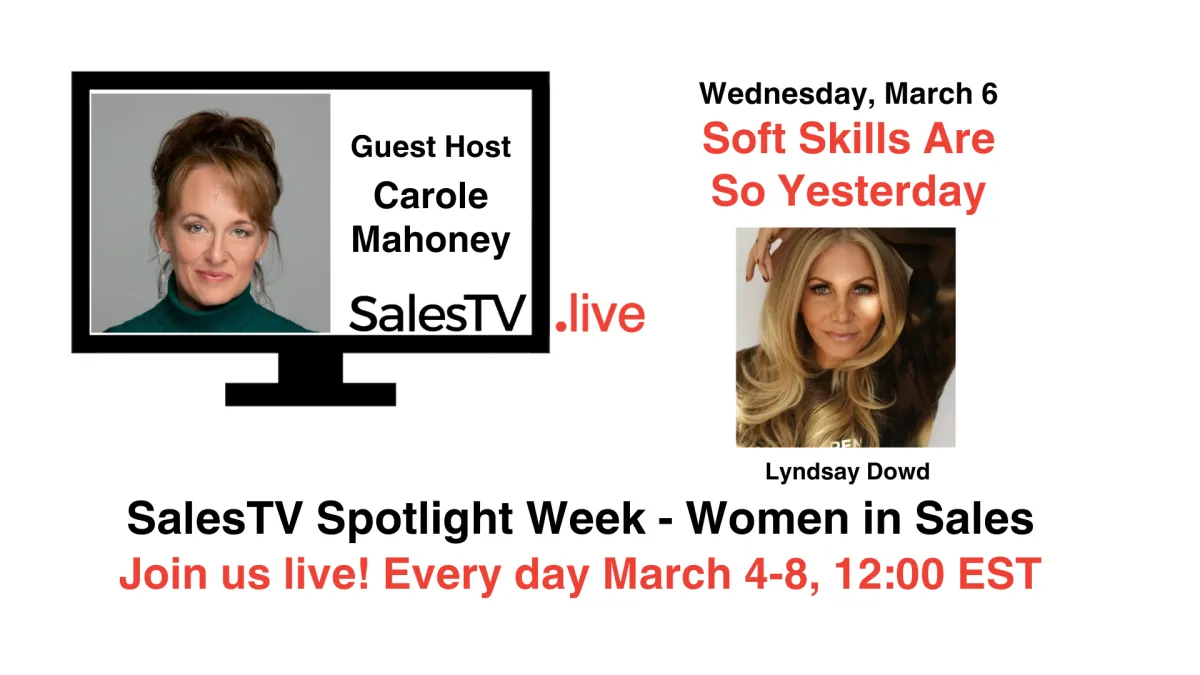
Register to Get LinkedIn Notification of This Episode!
Thursday

Register to Get LinkedIn Notification of This Episode!
Friday
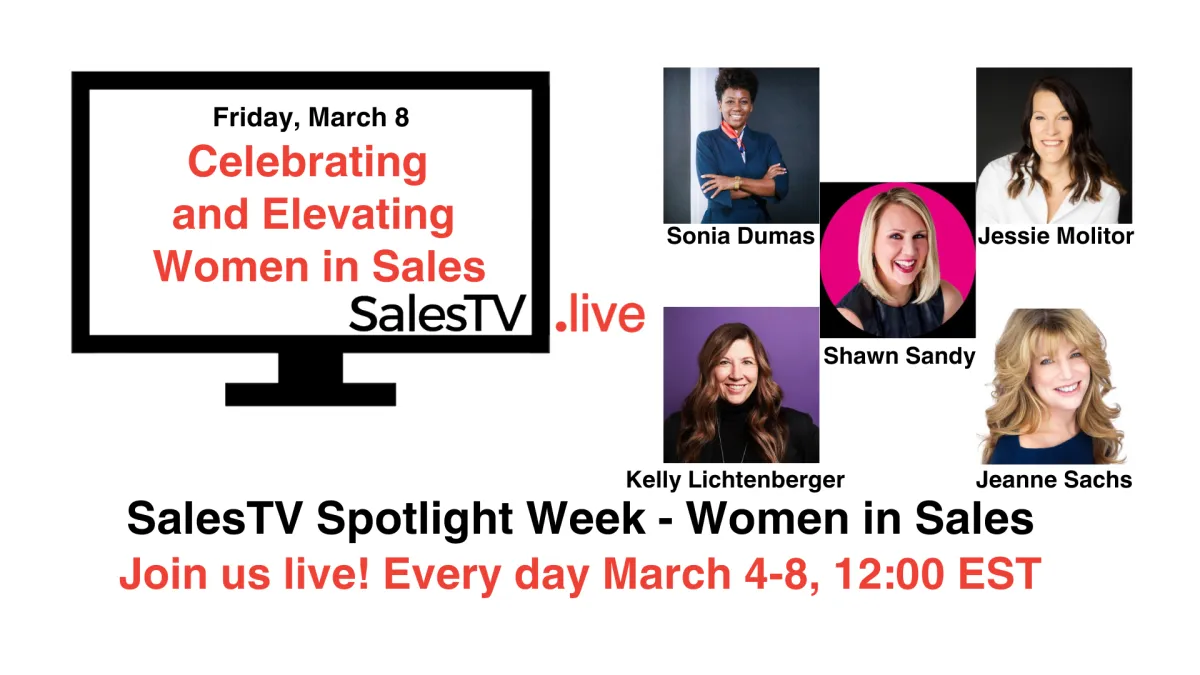
Register to Get LinkedIn Notification of This Episode!