
Coming Up
Early Edition

Register to Get LinkedIn Notification of Our Next Episode!
Mid-Day Edition
Register to Get LinkedIn Notification of Our Next Episode!
Special Edition
Register to Get LinkedIn Notification of Our Next Episode!
SalesTV.live is a weekly talk show about the world of Sales by salespeople for salespeople.
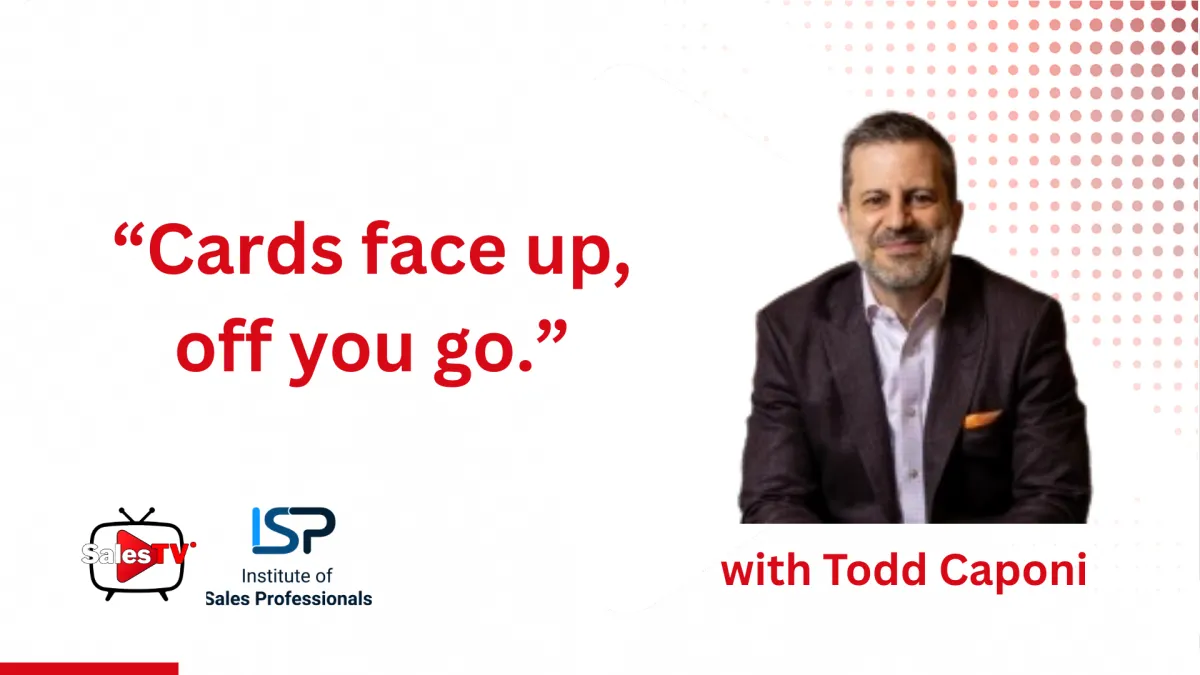
How to Negotiate in a Transparent Sales Era
Negotiation in B2B sales has changed - but most negotiation advice hasn’t. In a transparent sales era where buyers compare pricing, AI exposes inconsistencies, and the deal is no longer the apex of the relationship, traditional tactics are quietly eroding trust - and margin!
In this episode of SalesTV, we sit down with Todd Caponi, a multi-time Chief Revenue Officer and award-winning author, to explore how modern B2B negotiation must evolve in a transparent sales era. From presenting pricing with confidence to negotiating without defaulting to discounting, we examine what actually drives sustainable revenue growth when buyers compare notes, enterprise relationships extend beyond the deal, and long-term trust matters more than short-term concessions.
We’ll ask questions like -
* Why is traditional sales negotiation outdated in today’s market?
* How do I present pricing with confidence in enterprise sales?
* What does negotiation look like in a transparent sales era?
* How do I negotiate without defaulting to discounting?
Todd Caponi is a multi-time Chief Revenue Officer, Certified Speaking Professional (CSP®), and sales historian who has led revenue teams through IPO and acquisition - including a $2.7B exit to Salesforce. As the author of multiple award-winning books on transparency in enterprise sales - including his latest book, Four Levers Negotiating - Todd combines behavioral science, sales history, and real-world executive experience to help B2B organizations negotiate with confidence, protect margin, and build long-term trust. His perspective is grounded not just in theory, but in decades of leadership inside complex revenue organizations navigating growth, change, and competitive pressure.
Join us live and be part of the conversation.
This week's Guest was -
Todd Caponi, a multi-time Chief Revenue Officer and award-winning author
This week's Host was -
Rob Durant, CEO, ISP US
Transcript of SalesTV.live Mid-Day Edition 2026-03-03
Rob Durant [00:00:02]:
Hello and welcome to another edition of Sales TV Live. Today we're discussing how to negotiate in a transparent sales era. We're joined by Todd Caponi. Todd is a multi-time Chief Revenue Officer, certified speaking professional, and sales historian, author of multiple award-winning books on transparency in enterprise sales. Including his latest book, Four Levers Negotiating. Todd combines behavioral science, sales history, and real-world executive experience to help B2B organizations negotiate with confidence, protect margin, and build long-term trust. Todd, welcome.
Todd Caponi [00:00:50]:
Thank you for having me. I can't wait to get nerdy with you. So let's—
Rob Durant [00:00:54]:
Oh, fantastic. I'm looking forward to it as well. So with that then, Todd, let's jump right into it. In your opinion, why is traditional sales negotiation outdated in today's market?
Todd Caponi [00:01:08]:
Yeah, I mean, I would argue like traditional negotiation is not all bad, but thinking about it from the business-to-business sales world, a couple of things. I mean, first of all, you know, growing up in sales, I always thought it was weird that I needed a different personality to negotiate than I did to sell. Right? Like sales is supposed to be about building a relationship and helping customers achieve optimal outcomes. And we're building trust all the way to the goal line. Customer says, yes, yes, I want to buy from you. And then what do we do? Well, if we go back to the way that we've been taught, we subconsciously at least go, all right, cool. I'm going to start lying to you now. I'm not going to tell you what a good deal is.
Todd Caponi [00:01:53]:
You got to figure that out. And I'm going to focus on my outcomes, not yours. Oh, and by the way, I learned all I know about negotiating from former FBI hostage negotiators. Like, that never played well with me. And I was terrible at it, like always a terrible liar. But, you know, I just don't believe it's sustainable that Remember, like when we got started selling, like the sale was essentially the peak of the selling relationship, right? Like you'd sell, the product delivery team would deliver it, and then off you'd go on to your next sale. But there's two things, you know, we're kind of in this as-a-service economy where the deal is an early milestone on the path to customers who, you know, they buy, but they stay. They buy more, they advocate, they tell their friends.
Todd Caponi [00:02:47]:
And then you combine that with the proliferation of information, which means AI is exposing pricing models. People are getting together in communities and going, all right, what products do you own? How much did you pay? Like, what did you ask for? What did you get? I just don't believe it's sustainable to have every customer paying a different amount based on how well or poorly you negotiated it. I just don't see I don't see how that's sustainable. And, you know, the current approaches that we take to the way that we negotiate, we're eroding trust right at the most important peak of the sale, right? You don't get to tase the customer and drag them to jail. Like I said, you need a relationship with them. And most of the traditional approaches are born in theory. We can get here if you want, go sales history path a little bit. It's theories that were essentially designed in the 1970s that we're still taking those and putting different flavors and colors and approaches on it.
Todd Caponi [00:03:48]:
Everything else has changed in sales. Like, why aren't we changing negotiating?
Rob Durant [00:03:52]:
I can't help it. I'm going to ad-lib this right now. As soon as you said the '70s, my mind went to the movie Airplane. They paid their money. They bought their ticket. I say we let them crash.
Todd Caponi [00:04:06]:
That's like one of my top 5 favorite movies of all time too. That, dude, all right, I'm stealing that and I'm gonna use that too. That is such a fantastic call out. But to your point though, like, you mentioned in the bio, like I'm a sales historian. I don't know if anybody exists like that, but behind me, I collect late 1800s, early 1900s books and magazines on sales. I got a podcast called the Sales History Podcast where I just research a topic and then blow it up for 14 to 20 minutes. Negotiation, like so much of what we do in sales was born in the late 1800s, right? Like the approaches that we take with our messaging, our positioning, the way we demo, the way we handle objections. It's all the same.
Todd Caponi [00:04:55]:
Negotiating, though, is interesting because You know, for a long period of kind of this modern industrial state that we're in, negotiation wasn't that important because regulations created an environment called fair trade, which essentially meant you couldn't undercut competitors. Manufacturers could set pricing floors. There was all kinds of stuff around that. So salespeople were selling on value. 1975 comes around and the Consumer Protection Act takes us from fair trade to free trade. Right? Because it was like, why do we keep protecting the manufacturers? Shouldn't we be protecting the consumers? But it basically dropped the floor and salespeople had to learn to negotiate overnight. And while there were some negotiating experts, there's one of the books I have down here is from like the 1960s, 1970s. You start getting BATNA and you get, you know, getting the yes and some of that stuff in the late '70s, early '80s.
Todd Caponi [00:05:58]:
Those foundations are exactly what we still use today. They just have different labels and names on them. Right. And I think that's just super interesting to me is that we haven't caught up in negotiation like we've caught up in everything else.
Rob Durant [00:06:13]:
So along those lines, what does negotiation look like in a transparent sales era?
Todd Caponi [00:06:19]:
Well, yeah, it actually happened to me. So 2008, I had gotten promoted to my first senior vice president of sales role and there was pressure on me partially because I was younger than everybody I would be leading. That's number one. But then number two is, you know, when you take on a new leadership role, you got a whole team that's like, this guy better know what he's doing. And so here, I'll tell you a quick story. Here's what happened. Rep negotiating a high-stakes deal with an oil services company down in Houston. Multi, you know, 7-figure deal.
Todd Caponi [00:06:57]:
But this approach I'm going to describe, everybody who's listening can use with the smallest of the small to the biggest of the big deal. That doesn't matter. But my rep is, you know, gets the yes, the verbal. The person that's going to be procuring it tells him, hey, we say yes with the caveat that we got to work on this pricing and like it's too high as it is. And the rep was like, I got to go call my manager. So he called me and this individual procurement guy was like, all right, this middleman stuff is not going to sustain. Get that manager into a room here in Houston and let's bang this deal out. And so I get on a plane, I fly down there thinking it's going to be me, my rep, and the buyer.
Todd Caponi [00:07:40]:
And Again, I'm not a good traditional negotiator. As a matter of fact, I was terrible at it. I walk in, conference room doors open, and they brought their whole procurement team. And they were ready. Like, there was a woman that was like, let's go, man. Like, she couldn't wait to boat race me out of the place. And I just like, anxiety took over. And I'm like, this is going to be terrible.
Todd Caponi [00:08:03]:
And my rep is going to be like, this is my first real interaction with this guy. And he's horrible at this. I was like, ah, well, I accidentally spilled my cards face up. And it was based on a conversation I had had with my CFO a couple of days earlier. And so for everybody listening, steal this, right? And my book, Four Levers Negotiating, breaks it all out and teaches you how to actually use it. But the concept was this. Our company, their company, every for-profit business-to-business company in the world They're driven by 4 things. Number 1, volume.
Todd Caponi [00:08:39]:
So how much stuff the person buys. Buy more, better than buying less, right? Commit more, valuable. Commit less, not as good. Number 2, the timing of cash. Meaning we all like money. Pay faster is better than paying slower. Number 3 is the length of commitment. Committing longer is better than committing shorter.
Todd Caponi [00:09:01]:
And number 4 is deal predictability or the timing of the deal. A business's ability to predict with accuracy helps with investments. It helps with resourcing. There's so much value to it. And so that's essentially what happened. I go into this room, they come after me with, hey, we need a 35% discount. And I'm like, hey, our business and the pricing model is driven on these 4 things. Maybe we can use those to get you a little closer.
Todd Caponi [00:09:28]:
Commit to more volume. We pay you in the form of a discount to do that. Pay us faster. Pay you in the form of a discount to do that. Commit longer. Help us forecast. And suddenly this became cards on a table where instead of it being customer-vendor, it was a bunch of us sitting around basically understanding the gives and takes in a really simple type of way. And we ended up leaving the room as friends.
Todd Caponi [00:09:54]:
Where they paid us faster. They paid us for the whole 3-year deal upfront in exchange for a discount, and they helped us forecast. And so for every dollar we gave away in the form of a discount, we got something valuable back. They used it when they added additional products and divisions. They used it as renewal time. They remembered it and brought it with them if any of them left to another company. And I was like, wait, that was easy. We built trust, we discounted less, our forecast became more accurate, and we established what I call a sound basis on our pricing that became sustainable, that we could take from company to company, customer to customer, that delivers this consistent level so that we don't have every customer paying a different amount based on how well or poorly we negotiated it.
Todd Caponi [00:10:41]:
So that's it. You internalize the 4 levers: volume, timing of cash, length of commitment, timing of the deal. Anxiety goes away, confidence goes up, and you've got a consistent structure. I mean, that's stupid easy.
Rob Durant [00:10:55]:
It sounds almost too good to be true. That's fantastic. Yeah, I want to pick up on that. Oh, go ahead.
Todd Caponi [00:11:03]:
I was just going to say, like, it really should be and is. I'm going to grab a book here. So this book here is from 1910. It's Thomas Herbert Russell, his book Salesmanship: Theory and Practice. All right. There is a piece in here. There's, there's 4 words in here that I think you'll find funny. 1910.
Todd Caponi [00:11:23]:
Remember that the 4 words are buyers know more nowadays, right? Like we hear that today and it's like 110, 116 years ago. But it goes on in this paragraph to talk about that the knowledge of buyers has increased. And they're no longer disposed to pay what is asked of them unless persuaded in their minds that the sellers regulate their prices on some sound basis. Some sound basis. What does that mean? That means that when we go to the grocery store and we fill our cart, like, we don't go up to the cashier and be like, hey, I have a budget issue. I need a 20% discount. They'd be like, Buy 20% less, jackass, right? Like you wouldn't negotiate at a restaurant. You don't negotiate your gas prices because you believe the prices are regulated on something.
Todd Caponi [00:12:15]:
Like, I'm not going to go negotiate it. It's consistent. The B2B world has created a some sound basis problem where we essentially deliver a proposal. Here you go, sir. Right. And like the minute they start asking for stuff, we tommy boy it and go, okey dokey. Like, oh, you need net 60 instead of net 30? We can do net 45, like, bing, all of a sudden, all they have to do is ask to start getting stuff. We slow down our deals and we have eroded the some sound basis that really salespeople in B2B need to accelerate deals, confidence, and create longer-term deal values that are worthwhile.
Todd Caponi [00:12:53]:
And so that's really the core of this is it really is designed to be easy and it should be. Companies today, you've got to be consistent with flexibility within the levers.
Rob Durant [00:13:05]:
Makes sense. So I want to pick up on that anxiety bit that you were talking about a little. How do I present price with confidence in enterprise sales?
Todd Caponi [00:13:17]:
Well, I mean, first of all, you've got to believe it, right? I'll give you a weird analogy. So a couple of months ago, I was in New York And the people I was with, they were like, hey, let's go to Au Cheval. So Au Cheval is a restaurant in Manhattan. There's locations in Chicago too. They're known for their cheeseburgers, like the cheeseburgers, Rob, like they're fantastic, right? And the thing about it is the cheeseburgers are between $34 and $38 each, right? So that's a, that's a pricey cheeseburger, right? And it has—
Rob Durant [00:13:52]:
prices are more expensive on an island, right?
Todd Caponi [00:13:55]:
Well, that's. But even in Chicago, they're like, they're super high priced. And like, the difference is if you want bacon or an egg on it, right? Like, that's it. Now, when you walk into this restaurant, it's packed, it's full. Like, there's people everywhere and they're all ordering cheeseburgers. So you should at some point, unless you're a startup and you're still trying to figure out what your pricing really should be, if you've got customers paying an amount, you should have the confidence to go, hey, this is how much it costs, right? So like we start there. Nobody walked into that restaurant saying, hey, I just down the street, there was a restaurant. They're selling cheeseburgers.
Todd Caponi [00:14:37]:
And when you buy them, you get fries and a drink and it's $8.50. I think it's called McDonald's. So your price is ridiculous. Like this needs to come down, right? Like nobody would do that. The waiter walks in and be like, here you go, here's the menu. This is the price. And if you want $38, you're going to get these two things. If you don't want those two things, it's $34.
Todd Caponi [00:14:58]:
That's it. Right? Like that's where we, like, we've got to build confidence first. But then number two is for anybody that's ever run a marathon, a marathon is an event. Like it takes place on a day. There's pomp and circumstance, but if you don't treat it like a process, you'd probably be dead by mile 7. So we do have to upfront set accurate pricing expectations. Like, hey, listen, Rob, based on our understanding of your environment, your price is probably going to be between X and Y. And if that's way off of what your expectations are, let's talk about that now versus later.
Todd Caponi [00:15:36]:
Because hint, the term sticker shock has never been associated with anything good. In the history of humankind. But then number 2 is to be able to say, here's what the pricing is based on, right? Your volume component is seats, licenses, locations, users, hours, whatever that is. You know, commit to more, there's tiered discounts in there. And by the way, your pricing is based on upfront annual net 30 payments and a minimum of a 1-year commitment. And then as we get into it and we propose it, we make sure that's clear. Your negotiation events, like the marathon should become easier because you've laid that foundation. They understand the price range, and if it's way off, you should have lost that deal fast, right? Greatest thing in the world is winning fast.
Todd Caponi [00:16:21]:
Second best, lose fast so you get your time back. But now you've got the cards face up already, and negotiation should just become an extension of the sales process and not some anxiety-ridden FBI hostage negotiating tactic ridden type of event that happens that erodes everything that you've built up the whole period of your sales process.
Rob Durant [00:16:47]:
So it was pretty clear to me with the $34 cheeseburger versus the $8.50 cheeseburger, what happens when the competition is cheaper? Yeah, in a restaurant, it just is what it is.
Todd Caponi [00:17:00]:
Go there. Right. And how do— I'll interrupt for a second. If Red Robin tried to charge $34 for a cheeseburger, it would be empty, right? Like nobody would go. Yeah. If McDonald's did it, nobody would go. There's a value to price equation that we should have confidence in, that if we've got customers that are paying it and seeing that higher value, then we shouldn't be worried about the fact that McDonald's sells a meal for $8.50 and you're selling a cheeseburger with an egg and bacon for $38. Your restaurant's packed.
Todd Caponi [00:17:34]:
Like, it took us forever to get a reservation. I think we still ended up going at like 8:30 at night.
Rob Durant [00:17:41]:
But in a B2B environment, in an enterprise sales environment, how should I be responding when a competitor is cheaper?
Todd Caponi [00:17:50]:
Well, I think it's the same thing. Like, one of my clients is a massive software company and their competitors are always biting at their ankles, right? Like, and they're always cheaper, always. And I think they've got 200,000 customers, something like that. Adobe, it's company's Adobe, you may have heard of them. And so that's what they do in the first conversation. Like when I talked about setting that price expectation up front, now what they do is they walk in and they're like, hey, before we get into this, the price investment here is going to be between X and Y. And we're going to get into it. We'll scope this more accurately, but we've got lots of customers that look like you.
Todd Caponi [00:18:29]:
This is about what they're paying. Here's what it's based on. If that's way off of expectations, let's talk about that now. Oh, and by the way, there are cheaper alternatives out there. There's plenty of them. Like, if the price is going to be the issue, we'll actually even point you in that direction. But during this process, our expectation is like our 200,000 customers behind us, that you're going to see why. But again, if that's way off, like, let's talk about that now versus later.
Todd Caponi [00:18:58]:
And that's where you disarm that and you don't have the ridiculous discount asks. You basically shoot away those competitors from the first conversation. And again, if that's a valid concern, you're going to illuminate that elephant now versus after it's destroyed all the furniture in your office.
Rob Durant [00:19:16]:
I know we talked before. Remind me, why does discounting quietly damage long-term revenue growth?
Todd Caponi [00:19:26]:
Well, I mean, we've got to remember that in the feedback economy and the connection economy and AI exposing our pricing models, there's multiple things. So number one is it gets out like it's a race to the bottom. I was literally— A few weeks ago, I was in Key Biscayne doing a keynote for a big security company, cybersecurity company. And one of the people came up to me and he was like, hey, you know, Chief Information Security Officer, so they're buyers. They're like, we know, they literally get together and they talk about us. And they talk about how much you pay them. Like, we know that, like, and so when you start to discount, what's happening is A, they they're sharing and customers and companies know where to find the bodies, right? Like they know where to look. So that's number one.
Todd Caponi [00:20:18]:
Number two is, like I said, AI is exposing our pricing models. It already is. Most of the companies that I do negotiation workshops with, I'll go into AI and I'll be asking about like, hey, I'm a potential buyer of this solution. How is it priced? What discounts should I be asking for? What are other people paying? Like I'm popping it in and it's like, like, It's coming, right? We need to develop that consistency. But number 2 is we often think that discounts accelerate deals, right? Like, hey, our month-end discount is going to accelerate it. I would argue all day long that it actually slows down your deals because imagine, you know, right now, what is it, February 18th? Let's say that I tell you, hey, If you can sign here by the end of February, we'll give you 10% off. Now, what have we just done? Well, number one is we have told the customer that end of month matters, so slows it down. Let's say I was ready to sign now, but I know that if I wait till February 28th, your leverage goes down and my leverage goes up.
Todd Caponi [00:21:22]:
I can start to ask for more. So we just slowed things down. Now, let's say I can't possibly sign by February 28th. Am I going to tell you that? Maybe not. March 1st comes around and I'm like, hey, Rob, like, we're about ready here, but you know that 10% discount, we're going to need that in order to move forward. Let's say you said yes. Well, now you just eroded your deal value and you've lost the sound basis. Cool.
Todd Caponi [00:21:46]:
All right. But let's say you say no. Like, no, that went away. That's gone. What am I going to do? I'm going to go, all right, I'll wait until the end of March when you ask again. So we're consistently causing customers to wait and we're eroding the sound basis. The minute you get— I always make this joke that if you ever shop at Kohl's, the retailer, and you pay full price, we cannot be friends. Like, there's always a discount there.
Todd Caponi [00:22:14]:
It doesn't matter when you go. So discounts don't accelerate. They decelerate your deals. So those two things together, The proliferation of feedback, AI, pricing exposure combined with this idea that when we do these things, we are not accelerating, we are decelerating, means go in with the price cards face up. Here's the levers. You establish the sound basis, but you're giving them flexibility. You get them consistency. And like I said, Thomas Herbert Russell, the some sound basis problem that, hey, we're not persuaded to buy unless we think there's a foundation.
Todd Caponi [00:22:57]:
So we slow down. You're going to speed things up. Deal values will go up, trust will go up. And if you play that fourth lever right, your forecast will become more accurate too.
Rob Durant [00:23:09]:
Fantastic. Todd, if you were to emphasize the one thing you would want our audience to take away from today's episode, what would that one thing be?
Todd Caponi [00:23:18]:
Well, I'm going to give you something that has to do with sales overall. I'm actually going to leave you with two of my favorite sales quotes of all time. And they play in negotiating, but they play in sales. They play in all the things that you do. Quote number one from 1922. It's a guy named Arthur Dunn in his book Scientific Selling and Advertising. As you read the book, there's pages with words. You get to a page.
Todd Caponi [00:23:42]:
There's only one sentence at the top. It's my favorite sales quote of all time. And that quote is, "If the truth won't sell it, don't sell it." The truth won't sell it, don't sell it. It's such a great quote. But I want, like, when we're talking pricing, when we're talking value, we're talking solutions, we've got to be truth tellers, especially today. That was 1922 where the truth was not as easy to be found. The truth will always rise to the top, and that one lie is going to multiply by 10 in your pricing, in your solution, and all of that stuff. And then I'll leave you with my other favorite quote.
Todd Caponi [00:24:20]:
It's from another Arthur. This time it's Arthur Sheldon, 1911, The Art of Selling. It's a book on my right here on my left. And he says, true salesmanship is the science of service. Grasp that thought firmly and never let go. Never let go. The science of service. So be a service provider.
Todd Caponi [00:24:40]:
Your role is not to convince. It's to help buyers predict, to help them see optimal, like what they're actually capable of achieving and help them get there. Cards face up in your sales process and in your negotiating. Fantastic.
Rob Durant [00:24:57]:
I love it. Maybe because it sings to me, speaks directly to my approach. Todd, this has been great. On behalf of everyone at Sales TV, to you and to our audience, I want to thank you for being an active part in today's conversation. You can find a replay and full transcript of today's episode along with contact information for our guest and our host at SalesTV.live/FourLevers. Thank you all, and we'll see you next time.
@SalesTVlive
#FourLevers #SalesNegotiation #B2BSales #PricingStrategy
#Sales #SalesLeadership #LinkedInLive #Podcast
________________________________________
About SalesTV: SalesTV is a weekly talk show created by salespeople, for salespeople. Each episode explores sales, sales training, sales enablement, and social selling, bringing together sales leaders, enablement professionals, and practitioners from across the globe.
About the Institute of Sales Professionals: The ISP is the only body worldwide dedicated to raising the standards of sales. Its Sales Capability Framework, certifications, and member community are designed to address their one goal: To Elevate the Profession of Sales.


Monday
Register to Get LinkedIn Notification of This Episode!
Tuesday
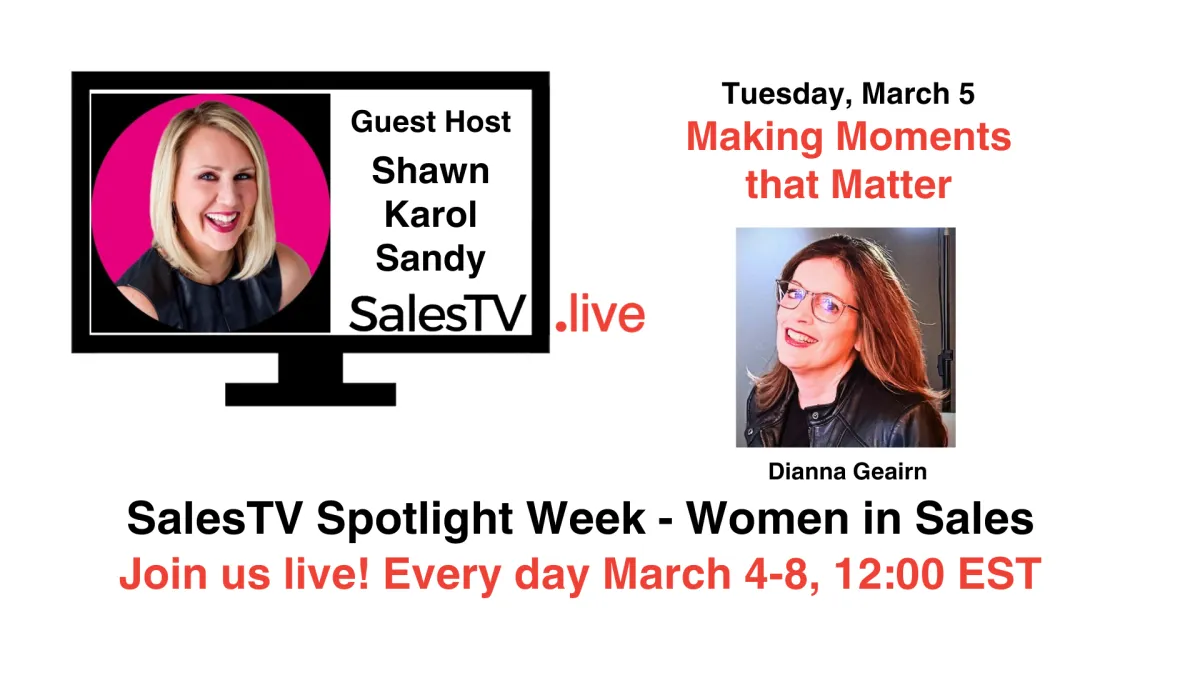
Register to Get LinkedIn Notification of This Episode!
Wednesday
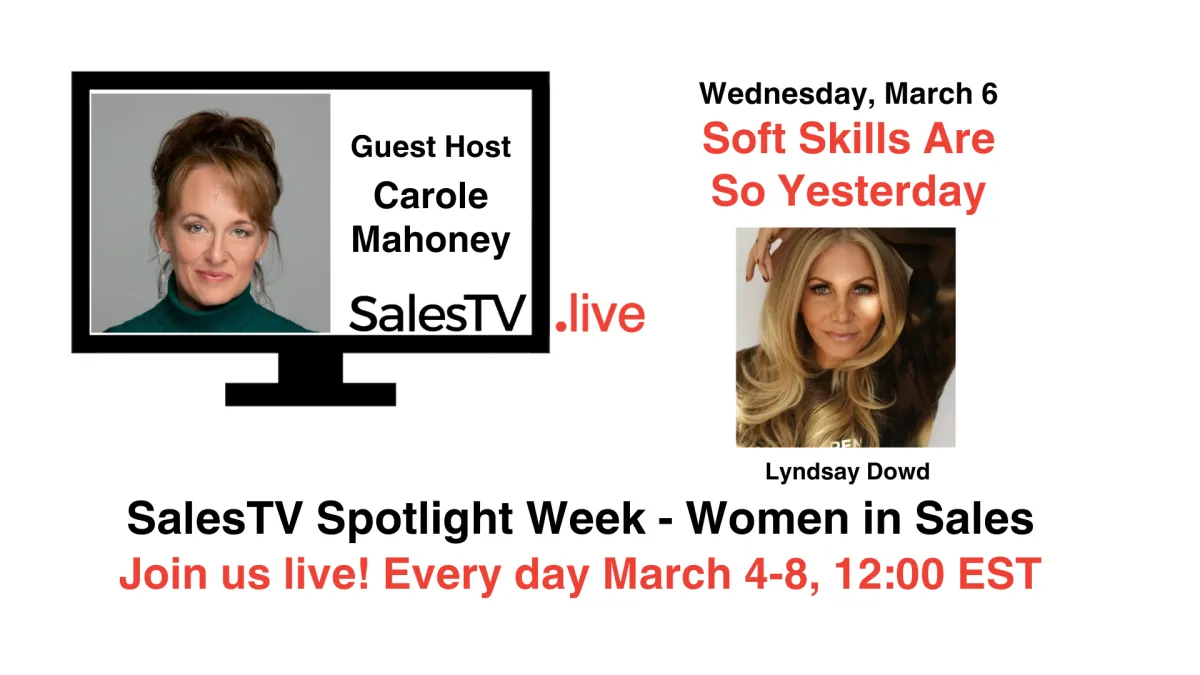
Register to Get LinkedIn Notification of This Episode!
Thursday
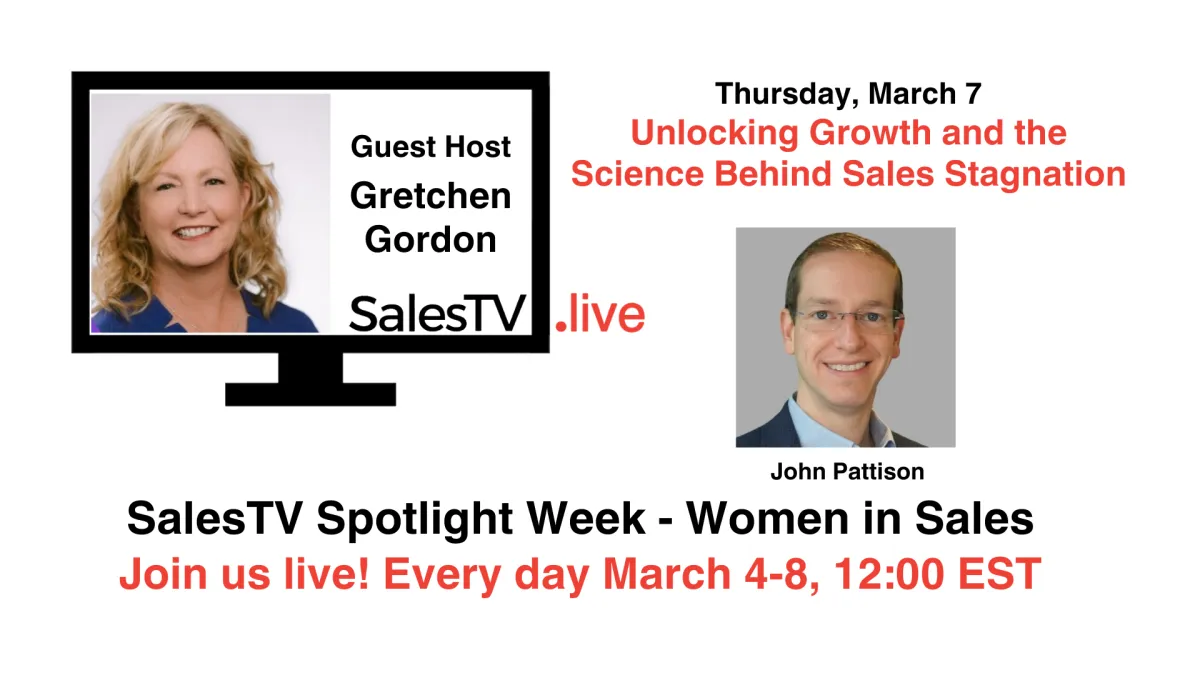
Register to Get LinkedIn Notification of This Episode!
Friday
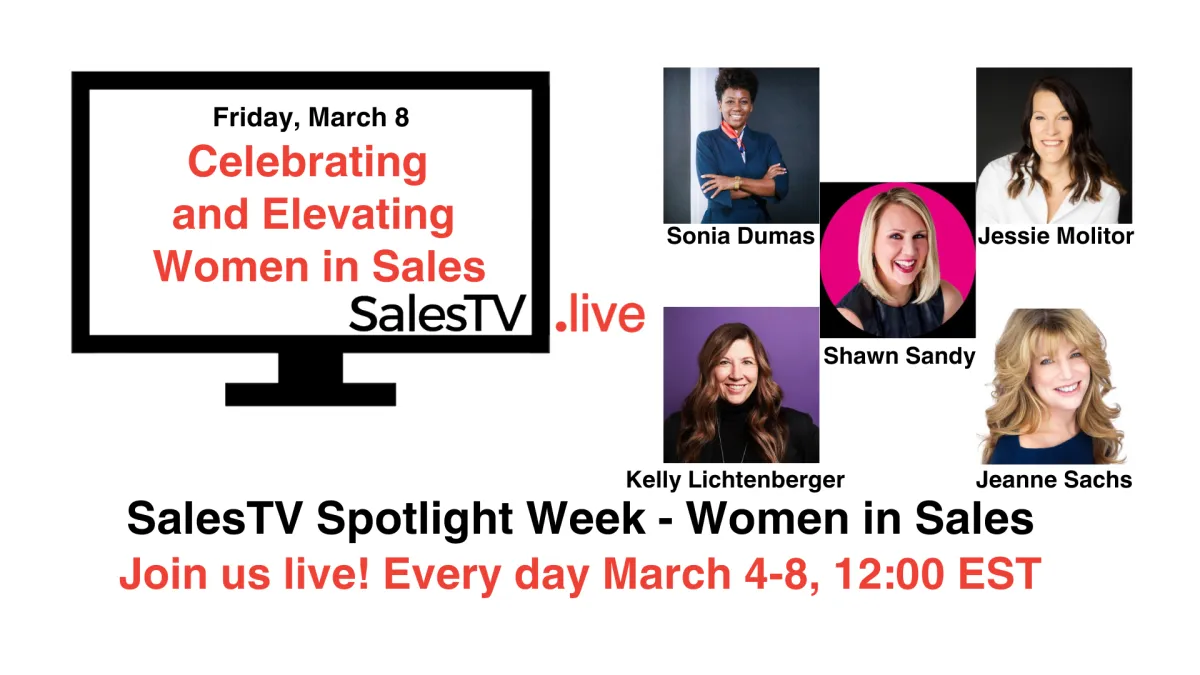
Register to Get LinkedIn Notification of This Episode!