
Coming Up
Early Edition

Register to Get LinkedIn Notification of Our Next Episode!
Mid-Day Edition

Register to Get LinkedIn Notification of Our Next Episode!
Special Edition
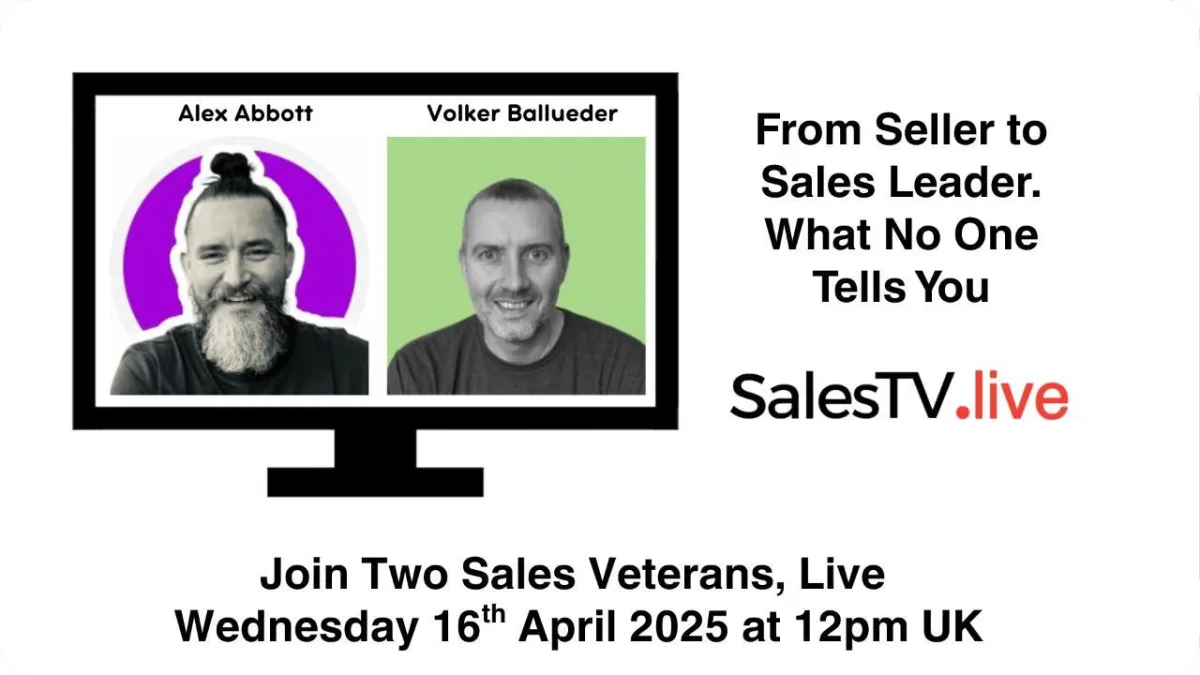
Register to Get LinkedIn Notification of Our Next Episode!
SalesTV.live is a weekly talk show about the world of Sales by salespeople for salespeople.
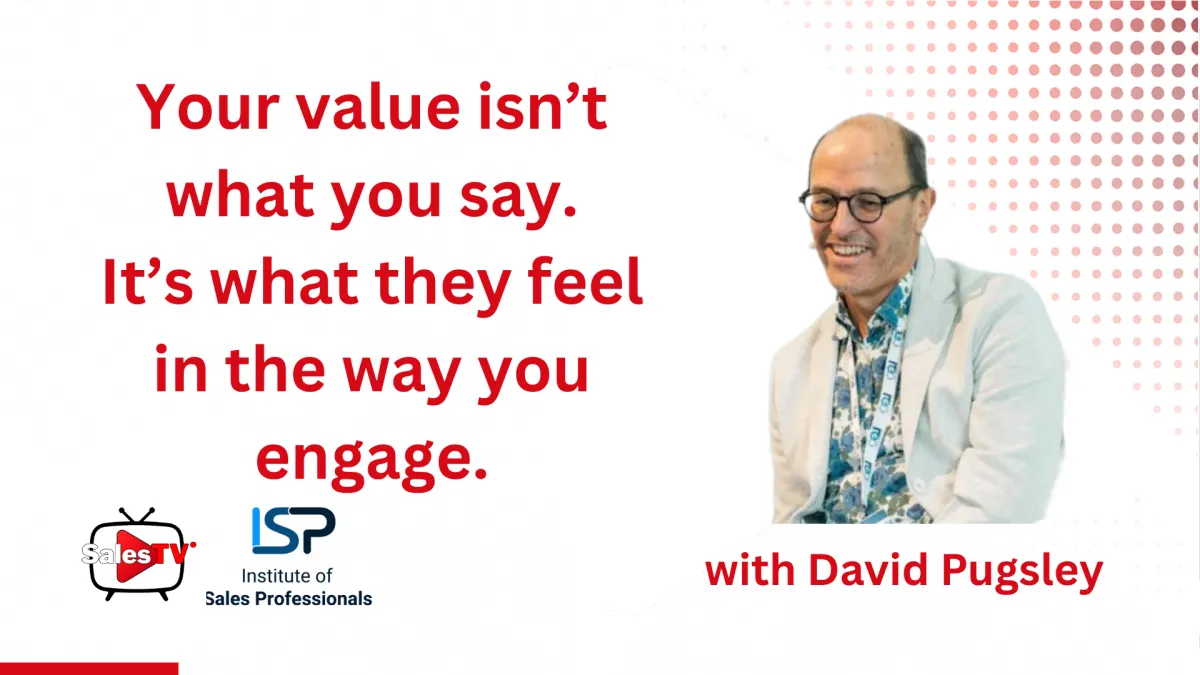
Buyers Don’t Want Volume - They Want Value
Buyers Don’t Want Volume - They Want Value
Most sellers are told to “do more.” More calls. More emails. More touchpoints. But in modern sales, volume doesn’t equal value. Buyers today are drowning in outreach - what they’re starving for is relevance.
In this episode of SalesTV we ask a simple but uncomfortable question: Are your conversations creating value, or just adding noise? Joining us is David Pugsley; with a vast career that spans the likes of the Royal Navy and Oracle among his stops, he now serves as a Connector Enthusiast at Salesforce. Together we’ll unpack what selling on value really means in 2025 - beyond the buzzwords. It’s not just a pricing strategy or a way to reduce discounting; it’s a mindset shift.
We’ll explore how experienced sales professionals can:
* Build credibility faster by leading with insight, not product information
* Translate purchasing decisions into value outcomes that buyers can feel
* Move from cold outreach to conversations that earn trust
* Balance credibility with humanity and authenticity in conversations
David Pugsley is a Connector Enthusiast at Salesforce and former VP of Sales & Strategy at Magia Consulting. David has spent his career helping organizations move from pitching features to presenting solutions that resonate. His approach reframes “sales activity” into “buyer alignment,” showing how meaningful engagement can outperform raw activity every time. Because true value-based selling starts when your message reflects what buyers actually care about, not what your dashboard rewards.
Join us live and be part of the conversation.
This week's Guest was -
David Pugsley, Connector Enthusiast at Salesforce
This week's Host was -
Adam Gray, Co-founder of DLA Ignite
Transcript of SalesTV.live Mid-Day Edition 2025-11-11
Adam Gray [00:00:02]:
Hello, everybody and welcome to another exciting episode of SalesTV. And I'm thrilled to have my old friend and ex colleague and buddy David Pugsley joining us today for a chat about. Well, I guess we, we're going to start by talking about the uncomfortable truths of Sales. More emails, more touch points actually leading to more sales and, and more conversations. Or is there a smarter way to do things? But I'm sure we'll end up in all sorts of other areas during, during the course of the conversation.
David Pugsley [00:00:37]:
Bouncing bounty.
Adam Gray [00:00:38]:
Yeah, yeah, absolutely.
David Pugsley [00:00:39]:
Hang on, I'll just send you an email.
Adam Gray [00:00:43]:
Yeah, well, several, I hope so. David, first of all, introduce yourself to, to the audience.
David Pugsley [00:00:49]:
Hello everybody. I, I had a very funny experience the other day because I've done something on LinkedIn for the past two and a half years and one of my colleagues said, what on earth is Feet Wet Friday about? So I am the inventor of Feet Wet Friday as well as currently, currently working at an organization called Salesforce where I've worked for the past couple of years. I've worked at various technology companies over quite considerable length of time and I started off my career in the Royal Navy where I was a logistics officer, so did that for a bit and then joined the wonderful world of technology mainly because I was quite excited by the way technology was going and I thought, oh, this sounds good and quite like the idea of being involved in the technology world. And so I came into it and I'm very, very honored and pleased to be sat in Salesforce Tower at the sort of like, I wouldn't say the twilight of my career, but definitely towards the end of my technology career. I am obviously planning on a new career once I finish this one, but that's another, another story.
Adam Gray [00:02:14]:
Yeah, well, I think it's interesting, isn't it, because you've gradually, I guess throughout your career moved closer and closer and closer to the cutting edge of, of technology. Whereas I think many people, you know, they, they, they do that when they're young and as they get older they, they kind of go into the, the, the karma waters of something which is more stable. But you've, you're, you're, I believe it's, it's kind of the bleeding edge, isn't it? You know? Yeah, very at the very forefront of, of this stuff.
David Pugsley [00:02:45]:
Yeah, no, it's an amazing time to be, to be alive and, and to be in a company like Salesforce for sure. And it's, you know, know, it's, it's, I feel just like amazed that I'm even here I keep on expecting, like, what are you, You're a bit old. Get out.
Adam Gray [00:03:03]:
So, so I, I guess that the, the headline for today was sellers are told to do more.
David Pugsley [00:03:12]:
Yeah.
Adam Gray [00:03:13]:
Phone more, email more, go to more events, more touch points. You've got to touch people nine times before they will have a conversation with you. It's a numbers game and all of this stuff. But I guess the reality is that the buyer is getting so bombarded by this stuff. You're one of a hundred people that's trying to sell me something. You reach out to me nine times. That's a thousand pieces of outreach nearly. And I'm only going to buy from one of you and actually I want to be the one that chooses that.
Adam Gray [00:03:47]:
So does more equal more?
David Pugsley [00:03:52]:
I think it's, it's, it's a very interesting question because I think at one level, of course, you know, if you work for a large brand, then there is a certain element of, you know, if you, if you reach out to people with a large brand name on your, you know, on your, your tag, it's kind of like there is a, there is, you're bound to rise above to a certain, you know, population of buyers. You will rise above, you know, a brand that they don't recognize, I think where, you know. But I've worked in all sorts of companies and, you know, what I do know is that, you know, when you work for a small company, which I've done before, you don't, you don't have that ability, you know, you don't have that natural ability to sort of write, you know, the name, the brand to rise to, to rise above, you know, the email. But to be honest, you know, I don't use email anyway for outreach, you know, since, you know, working with you guys, you know, my outreach is all on, all on LinkedIn anyway. So, yeah, I'm quite surprised when I think to myself, oh, perhaps I should email them. Maybe they've actually given me their email.
Adam Gray [00:05:17]:
Yeah, I guess that it's interesting and before we went live, I was, I mentioned that Tim and I had recently done a presentation to a company that one of your ex colleagues was at and used you as an example with your Feet Wear Friday, the inventor of Feet Wear Friday. And the fact that it's an irreverent, fun, foolish, laughy kind of entertaining thing to pretty much every week. But it's, it's, it's brilliance is not in the fact that there's you kind of doing a selfie and grinning at the camera saying, look, my Feet are in the Thames. It's the fact that somebody who does that can't be a threat.
David Pugsley [00:06:03]:
Yeah.
Adam Gray [00:06:03]:
And consequently, when you, when you say to them, hello, do you want to have a call? They go, yeah, why not? Because you're not going to be one of those hideous salesmen that grabs me by the lapels and wrestles me to the ground to get an order out of me. Have you found that since you've developed your kind of, I guess, your online Persona and this methodology that you have developed, has that meant that doors have opened that otherwise wouldn't have done?
David Pugsley [00:06:32]:
Yeah, I think so. Certainly my experience is obviously that is. So I think one of the. I suppose there's a couple of things because, you know, you and I have had many chats over the years about kind of like, why doesn't everybody do this? And, you know, it's not that difficult to do stuff online. I think one of the interesting things that I was looking at my Twitter feeds the other day and I am, I, you know, I, I. And I don't use Twitter anymore at all. But I'd actually had a Twitter post. A tweet.
David Pugsley [00:07:16]:
That's what we used to call it, wasn't it, back in the day? Yeah, a tweet go viral. And it was actually 10 years ago. And I was thinking, gosh, I've actually been at this longer than I thought. And so I suppose, you know, one of the, One of the things about social media is, is that you. And, you know, I talk to lots and lots of people about social media and my presence on social media, you know, and I advise quite a few people, particularly in, you know, I'm involved in the City of London and, you know, I speak to people in, you know, organizations in the city about, you know, using social media, volunteer organizations in the city to, about using social media to sort of, you know, enhance their pres. And I think, you know, one of the things that I notice when I talk to a lot of people is some people, you know, they get it and they start building up because I always say to people, you know, just let me know when you post and I'll, you know, I'll leap on and, you know, just say, you know, great or whatever and encourage them. But some people find that, that, you know, they're not the ability to do something in social media. I think is.
David Pugsley [00:08:38]:
There is a challenge there and I think for people, you know, an internal challenge for people to understand that actually putting yourself out on social media can be a good thing. Now I totally understand I was talking to a lady yesterday and I totally understand for, you know, particularly, you know, for ladies more than men, there is a, you know, there is a challenge. You know, you do get some trolls around, particularly if you, you know, I've obviously never had that problem because I'm, I'm an old white bloke. But you know, there are problems if you are, you know, putting yourself out there because people can, you know, troll you. And so I think, I think so I do understand that and I do understand the reluctance of some people because of that sort of fear of that behavior occurring. I suppose. And this was a conversation I had with this lady yesterday was that, I suppose the thing is that providing, and to a certain extent that's why my content is the way it is. Providing you're not actually producing something that someone's feels troll worthy, then it can, can, you know, it's kind of limited and it's kind of like, you know, people leaping on it.
David Pugsley [00:10:01]:
Although, you know, some, some people have, you know, I posted something to the day about, you know, explaining technology to what I called normal people. And even when I was, even when I was doing the posts, I was thinking, I bet this all kind of like, you know, there'll be some reaction to this. And there was. And, and because what's a normal person? You know, it's kind of like my point was about, you know, me, my explaining it. But you know, someone obviously picked up on it and you know, so I think that's, that's. You have to be careful but, and you have to use it wisely. But it is a great way to. Because the fundamental problem with any organization that you're trying to speak to another organization, the fundamental problem is, is you, you want to engage with people so that you can understand what, what problems they've got.
Adam Gray [00:10:59]:
That, that was going to be the next, the, the next question. Because you know, this, this is a means to an end, isn't it?
David Pugsley [00:11:06]:
Yeah.
Adam Gray [00:11:07]:
You know, the reason that you're on social is to get conversations because, you know, I remember I was speaking to an organization and it may even have been Salesforce where I said to this, the sales leader can your sales team. Sell leader said, yeah, okay, so why have you got no pipeline then? And I would suggest it's because you've not got anyone to sell to because no one will take a conversation with you because they know what's going to happen as a, as a result of that. And I think that, you know, part of the, part of your skill, I mean, clearly you understand about how to talk to the buyer, how to understand their needs, how to map the solutions against the problems that they feel that they have and they want to solve those problems and how to build trust with them. But you can only do any of that if you're actually engaged in a conversation, can't you?
David Pugsley [00:12:03]:
Yeah, exactly, exactly. I think that's the fundamental tenet of any social interaction, let's say can't. When you're sort of like talking to. I mean, you always use the cocktail party. Or is it. Tim always uses a cocktail party analogy of kind of going out to people and saying, would you like to buy something for me?
Adam Gray [00:12:27]:
Yeah. And you know, it sounds like a joke when you say it, but the reality is that is how many salespeople are. And this whole idea that I need to. And, and this is the point, isn't it? You know, there's a big thing in sales about having to build credit credibility and trust and rapport as quickly as possible and demonstrate your unique attributes in the product.
David Pugsley [00:12:53]:
Yeah, yeah.
Adam Gray [00:12:54]:
Actually I always think that, that until I have bought from you, it's all just words. Every company has got the solution to my problem. Every company is market leading. Every company is customer focused. Every company is. So it's all just words.
David Pugsley [00:13:08]:
Yeah.
Adam Gray [00:13:09]:
And those words only land and only actually listen to what you say. If I know you and like you.
David Pugsley [00:13:14]:
Yeah.
Adam Gray [00:13:14]:
And. And I think that the, the. I've always thought it very strange that, that you know, this idea of multi threading or omnichannel outreach, you know, where I'm gonna send you a connection request on LinkedIn and I'm gonna phone you and then I'm gonna send you an email and then I'm gonna like a couple of your posts, then I'm gonna follow up with an InMail and then I'm gonna do such a. It is a good way of getting blocked on multiple platforms rather than.
David Pugsley [00:13:42]:
Yeah, no, definitely. I mean, I think, you know, I think there is, there is definitely a place for, for some people. You know, if you work in a large organization like I do, we are incredibly lucky because we, we attract some really brilliant people who actually are very, very, very good at picking up the phone and talking to people. I am absolutely hopeless. Because, because it's just not my skill set, you know, I need to. Is building relationships and you know, working out what people's problems are and all of that sort of thing. But we do employ here because we are the company. We are, we do employ some people who are extremely good at reaching you know, reaching out to people on phones and, you know, they, you know, they have to work bloody hard at it.
David Pugsley [00:14:36]:
And it's, you know, it's a bit, it's obviously a, you know, it's a job that some people are a lot, lot better at than others and think given the scale that we work at, then obviously we've got, you know, many, many, many people want to come and work for us and, and so therefore you, you, you, you sift out the ones that can actually do that particular, that particular job very, very well. Most companies don't have that, you know, you're never going to get that scale to be able to do that because, you know, just dipping in too small a pool and people don't want to, you know, come on, you know, work for you just to pick up the phone anyway because, you know, it's a bit different if you pick up the phone from Salesforce than if you're picking up the phone from Tiny Weenie, you know, your own software company nobody's ever heard of. So, so I think. So there's, there is, I think the multi threading thing is interesting. There, there are, there is a way of doing multi, multi threading intelligently. And to a certain extent, it's kind of like what happens around here is, is that, you know, I obviously link up to a lot of people and talk to a lot of people and you know, unbeknownst to me, sometimes those two kind of worlds collide because, you know, I'll be sort of, you know, warming someone up over here and one of my, one of my very, very keen and young colleagues will be on the phone to them and sometimes that works. And because they've kind of like, they've got the wall, everything from me. And the phone call just comes at the right time and they're willing to have a conversation.
David Pugsley [00:16:18]:
So it's sort of interesting how that, you know, that can work, but I think you've got to work it, you know, in a way that's kind of more intelligent than just like, let's blast everything.
Adam Gray [00:16:33]:
Yeah. So you've got a fantastic way of getting through the door and having conversations with people because they don't see you as, oh, hello, I don't know what happened there. So you've got, you've got a fantastic way of getting through the door and having conversations with people. So how do you then fulfill that promise that you've created? So you're a nice guy, you're always smiling, you part of the face that you show on social Some of it is irreverent and fun. Some of it is not. Is very professional. You know, when you're in your garb for the City of London stuff, you know, like a proper city gent.
David Pugsley [00:17:31]:
Yeah.
Adam Gray [00:17:31]:
And somebody that is very. Has huge credibility. So. So how do you. How do you move from kind of he's the friendly guy to. To being somebody that has credibility and is able and. And creates the. The belief.
Adam Gray [00:17:48]:
And I say. I say create the belief because until I bought from you, I don't know whether you can actually do it. Yeah. Create the belief that you can solve this problem, this burning issue that I have in my business. How do you make that transition?
David Pugsley [00:18:01]:
Well, I think. I think it's very simple because you're all one person, aren't you? I am that person. So I'm not actually adopting two different Personas. I am, you know, I am who I am. And I think what part of that, part of my sort of journey on LinkedIn is, is being exactly that, showing that. That I'm not a, you know, this person over here and that person there. It's all the. The same person.
David Pugsley [00:18:29]:
And I may be wearing a different costume because people expect me to wear a top hat and tails, you know, at certain events in the city. And it's quite fun because you can go on the underground in your top hat and tails and everyone looks at you, but. Or a kilt for a wedding on Edinburgh Castle, you know, but. But I think. I think the, you know, I think the mistake I made early on in my career and to a certain extent, you know, this is sort of Navy training that did this was that the Navy sort of said, right, we're going to strip you right back and then build you up. So that's, you know, your basic training in any of the armed services is always about strip out your personality and we'll build you up in the personality that we think a naval officer, in my case, should have. And of course, then, you know, you then spend the next 20 years trying to get rid of that and coming back to who you are. And I think one of the things that I've, you know, that's benefit of, you know, being age.
David Pugsley [00:19:31]:
You know, the age that I am is mid-30s. Yeah. Obviously you get closer and closer as you get older, you get closer and closer to who you really are, because, you know, that's just a part of life, isn't it? And I think that's one of the advantages that I've got, is that I don't have to adopt A different Persona, know, for different. Different things. You know, if I want to be serious, of course I can be serious. And if I want to get a point across, of course I can get a point across. It's kind of like. But I can do that in a fun and a natural way without having to adopt a different kind of like, oh, I'm now this person rather than that person.
David Pugsley [00:20:07]:
I think that's just experience, I think, as well. And I suppose one of the things about one of the powers of doing video is that they see that, don't they? You know, a viewer of my social feed will see, you know, my. My whole person.
Adam Gray [00:20:25]:
So would you say that. And I know it's a much overused and hackneyed word, but is being authentic the key to this?
David Pugsley [00:20:34]:
Yes, definitely.
Adam Gray [00:20:36]:
And let people see who you really are.
David Pugsley [00:20:38]:
Definitely. And, you know, some of the best advice I've received most recently has been just be yourself, David, because there was a recent. I had to do a panel, which is actually, funny enough, the first panel that I've ever done, which is really strange, isn't it? But, yeah, it was. It was a panel discussion at a. At a conference, and. And I was. I was getting myself in all sorts of knots around, you know, I've got to look, you know. Exactly that.
David Pugsley [00:21:06]:
I've got to look professional, come out with, you know, all these sort of, you know, our Salesforce stories and all that kind of stuff. And. And, you know, the best advice I received, you know, because I was sort of like pitching a couple of different people in rehearsals and practicing, was just, be yourself, Davis. Why are you doing this sort of strange thing?
Adam Gray [00:21:29]:
And I guess. I guess that that's in part because these people already knew you through how you behave on. On social, meeting you for the first time. They kind of already knew who you. Who you were.
David Pugsley [00:21:41]:
Yeah, yeah, yeah, exactly. Exactly. So I think that that's kind of like, you know, that that's. That's a superpower, isn't it? If you can be yourself and. And still have a. Have an ability to. To bring someone on a journey, then that's. That's a really good superpower to have, isn't it? And I think, like all of these things, it's that famous Yoda.
David Pugsley [00:22:08]:
There is no try. We got to do or not do. And the truth is, if you want to be that person, you got to do it, haven't you? And if you want to do social media, you've got to do it. So if you want to find a way, because, you know, I Started social media out of. Yeah, obviously I've had that longer journey on social media, but the bit we're talking about, about, you know, outreach and you know, pipeline development, that, that started for me because I had no pipeline and I was like, well, what do I do? How do I, you know, how do I get pipeline? So I read Tim's book because I couldn't afford your course and I self, I self taught myself. But it was a bit like, just for the audience here, it was a bit like I taught myself windsurfing on the same sort of, you know, methodology that I can, you know, get a book and, and read it. But let me tell you, windsurfing from a book is not the same as, you know, being, being taught by a professional. And if you want to be taught by professionals, I would thoroughly recommend Tim and Adam.
Adam Gray [00:23:18]:
Yeah, well, thank you. It's very kind. But interestingly, before we went live, we were chatting about a post that I'd seen earlier today about a guy had kind of analyzed the amount of money that I'm not sure whether it was his company or one of his clients was spending on sales tech that they could do reporting. So they had tools for outreach and sales navigator and a CRM and a voice analysis software and all of these different things and it was, it was like £9,000 a year.
David Pugsley [00:23:51]:
Yeah.
Adam Gray [00:23:51]:
The personal training budget of £500 a year.
David Pugsley [00:23:55]:
Yeah.
Adam Gray [00:23:55]:
And I think that, and you know, we haven't got a huge amount of time left but, but explore this for me, if you would. In, in the world of technology, there's this constant and inexhaustible drive for efficiency and for shortcuts to get from where you are to having a full pipeline, insights, you know, limitless number of leads, etc. Etc. Etc. But success comes from authenticity or in my experience and, and humanity and certainly well within your company. All of the people that I have seen that have been ultra high performers have all been people that are very good at being human. You know, maybe they're brilliant technically, maybe they're not, but they are brilliant at being human. And is, is that something that we need to be mindful of moving forward? That the answer isn't in a new tool that provides a constant stream of high quality leads or whatever?
David Pugsley [00:25:04]:
I think, well, we are entering a very interesting era now with the AI stuff because I suspect that will. Because a large language model can appear to be quite human in its way of interacting and I suspect we'll see some companies come up with some ways of appearing human. In that sort of interaction. And it will be fascinating to see kind of like how that plays out because obviously there is that bit where you get kind of like something that appears human, then you discover it's not. So you've got to be kind of of like really, really cautious around, you know, how that, how that, how that, how that works. But I think, you know, for a large organization like Salesforce, the problem that you know, and I'm sure other I know from other corporates I've worked for, the main problem is about control. And you know, so you want stats that continually tell you, you know, like what was, how many calls have been made or how many emails being sent or how many whatevers. And so therefore you know what the pipeline is and we're trying to measure how things are moving through pipeline and stuff.
David Pugsley [00:26:34]:
And I think what, you know, the humanity is all at the front end of that because it's like you don't have conversations without the humanity. And I think that's where the problem most corporates have is. They find it really, really difficult to measure the humanity and measure the effect of training on people. You know, what is the effect of giving someone a training course versus investing in more tech?
Adam Gray [00:27:08]:
Yeah, so because, I mean, one of the stats that, you know, you're familiar with the ISP and you know, we do loads of work with the isp. One of the stats is that that there's more money now being spent on sales tech than ever before and a smaller and smaller proportion of sales reps are achieving their quota. So we've got kind of this bit that should be helping people to, to make their quota is going up and up and up and up and up. And this bit that should be the result of that is going down and down and down and down and down. Now there's a whole host of, you know, it's a challenging market at the moment, there's a lot more competition, salespeople are being overquoted and all of these. But arguably the reason that you're doing this one which is going up is to address this problem and it's failing to do so. I, I think moving forward we need to, to tread very carefully, don't we?
David Pugsley [00:28:00]:
Yeah, no, for sure. Particularly as, you know, we are entering a, a very different world, I feel from the world we've all experienced for the last 20 odd years and it's accelerating fast. So I think we've got to be alive to the possibility that we could go this way or that way. And you know, we need as humans to be ourselves. Keep, keep everything human and make sure that the human to human interaction is the most important thing.
Adam Gray [00:28:39]:
Absolutely. David, thank you so much for coming on the show. So where can people get in touch with you?
David Pugsley [00:28:46]:
So I am mainly on LinkedIn.
Adam Gray [00:28:50]:
There's a surprise.
David Pugsley [00:28:54]:
Or you can email me or telephone me by my daughter. Details are indeed on my contact on LinkedIn so please feel free to, to reach out. I'm very happy to have a conversation with anybody about, about, you know, about anything basically but about any of the subjects we've discussed today.
Adam Gray [00:29:15]:
Fantastic. Thank you. And for everyone in the audience, if you'd like to sign up to our newsletter you can scan the QR code here and good newsletter. Absolutely. Well we do our best. So David, thank you so much and everybody in the audience thank you so much for watching and until next time we hope to see you again soon. Bye bye.
@SalesTVlive
#TalkValue #ValueSelling #ModernSelling #SalesConversation
#Sales #SalesLeadership #LinkedInLive #Podcast
________________________________________
About SalesTV: SalesTV is a weekly talk show created by salespeople, for salespeople. Each episode explores sales, sales training, sales enablement, and social selling, bringing together sales leaders, enablement professionals, and practitioners from across the globe.
About the Institute of Sales Professionals: The ISP is the only body worldwide dedicated to raising the standards of sales. Its Sales Capability Framework, certifications, and member community are designed to address their one goal: To Elevate the Profession of Sales.


Monday
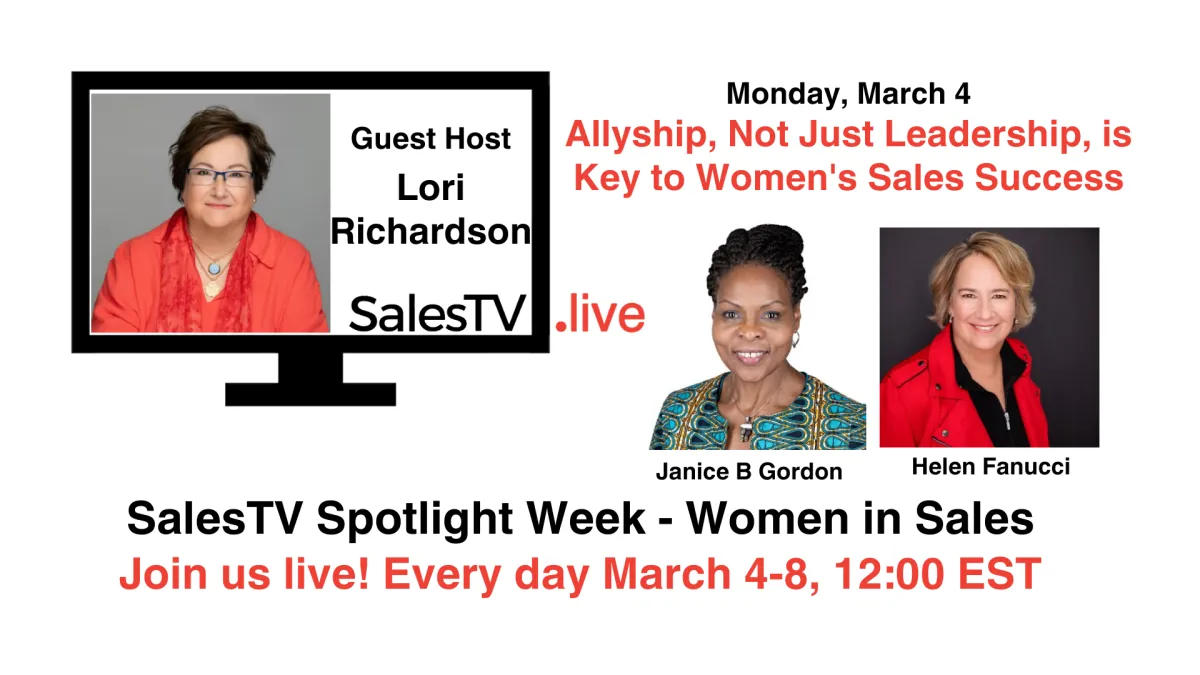
Register to Get LinkedIn Notification of This Episode!
Tuesday
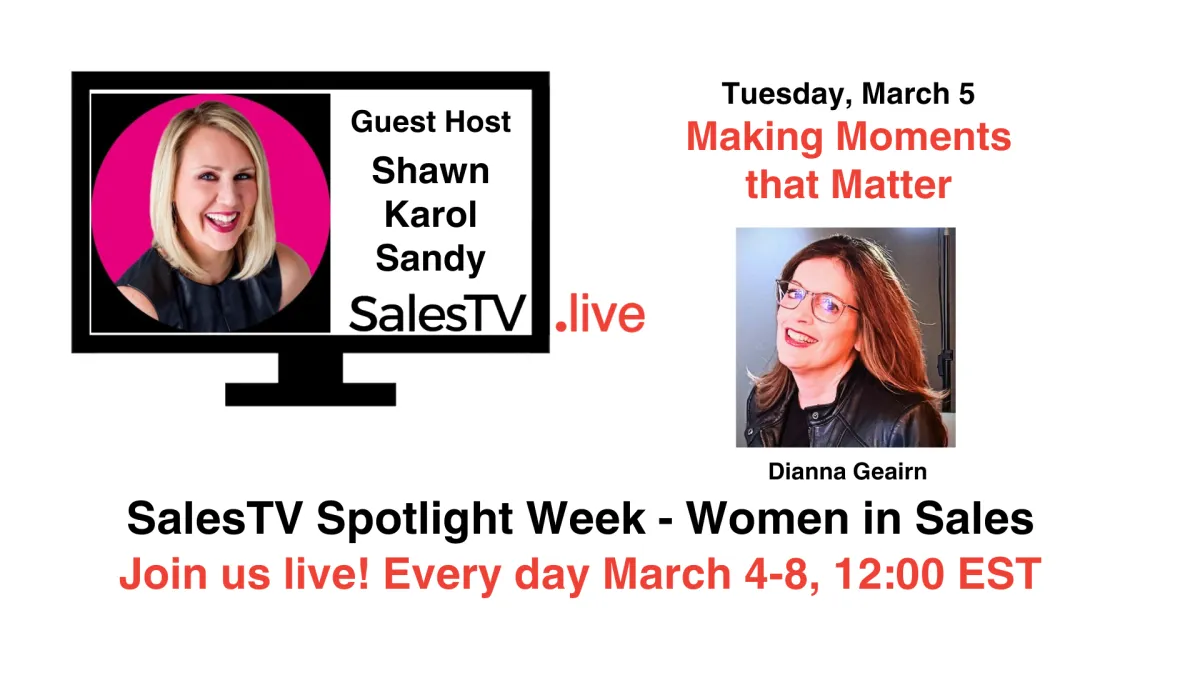
Register to Get LinkedIn Notification of This Episode!
Wednesday
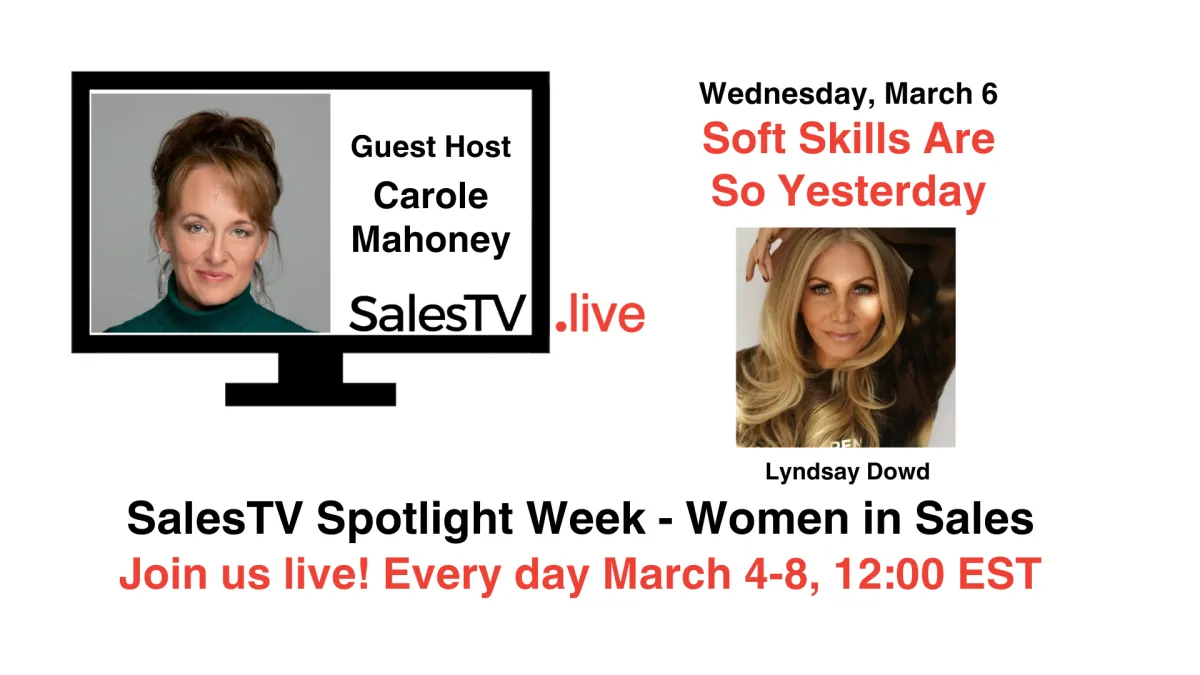
Register to Get LinkedIn Notification of This Episode!
Thursday
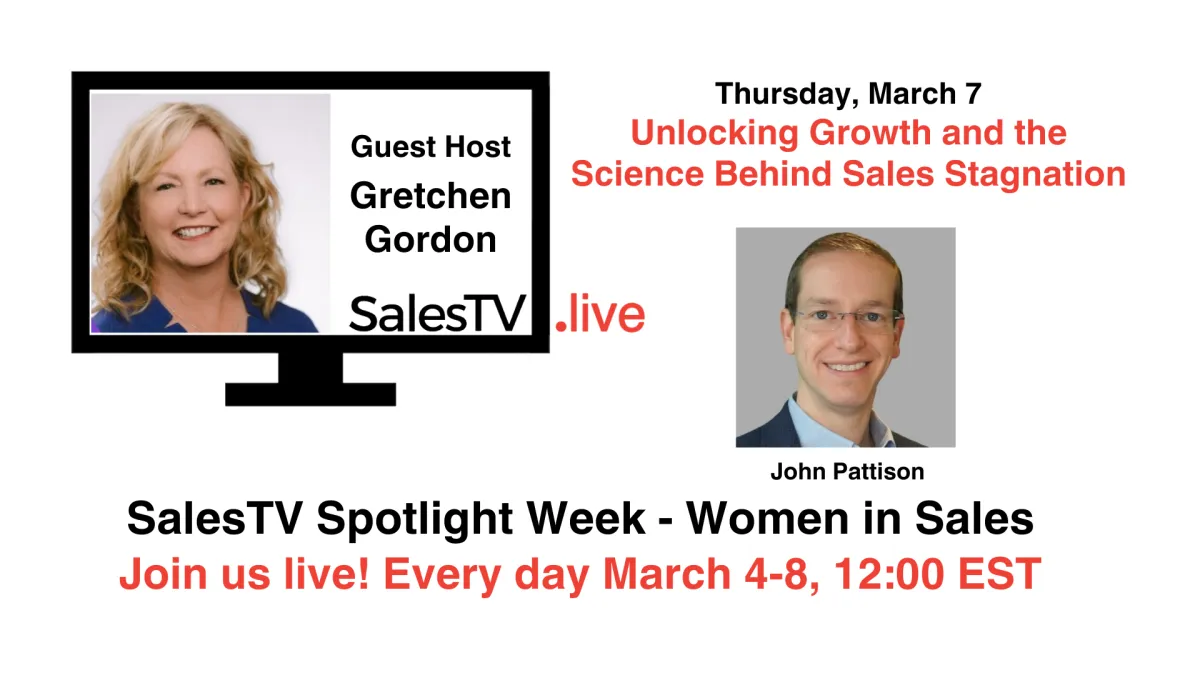
Register to Get LinkedIn Notification of This Episode!
Friday
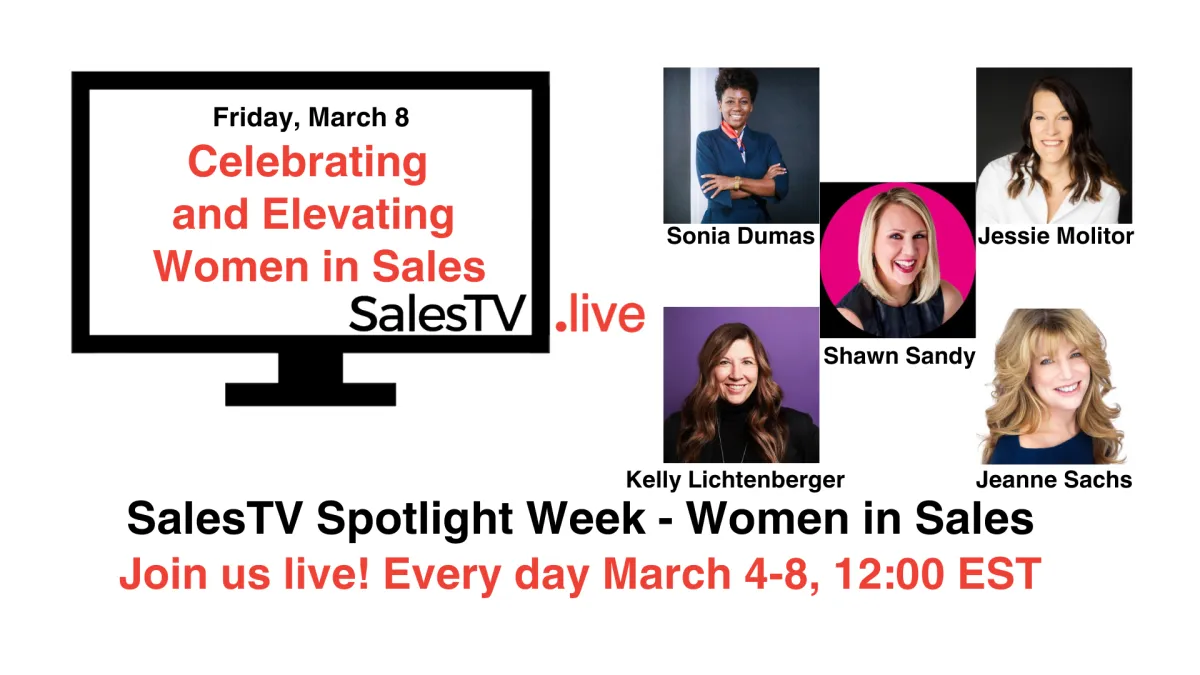
Register to Get LinkedIn Notification of This Episode!